November 5


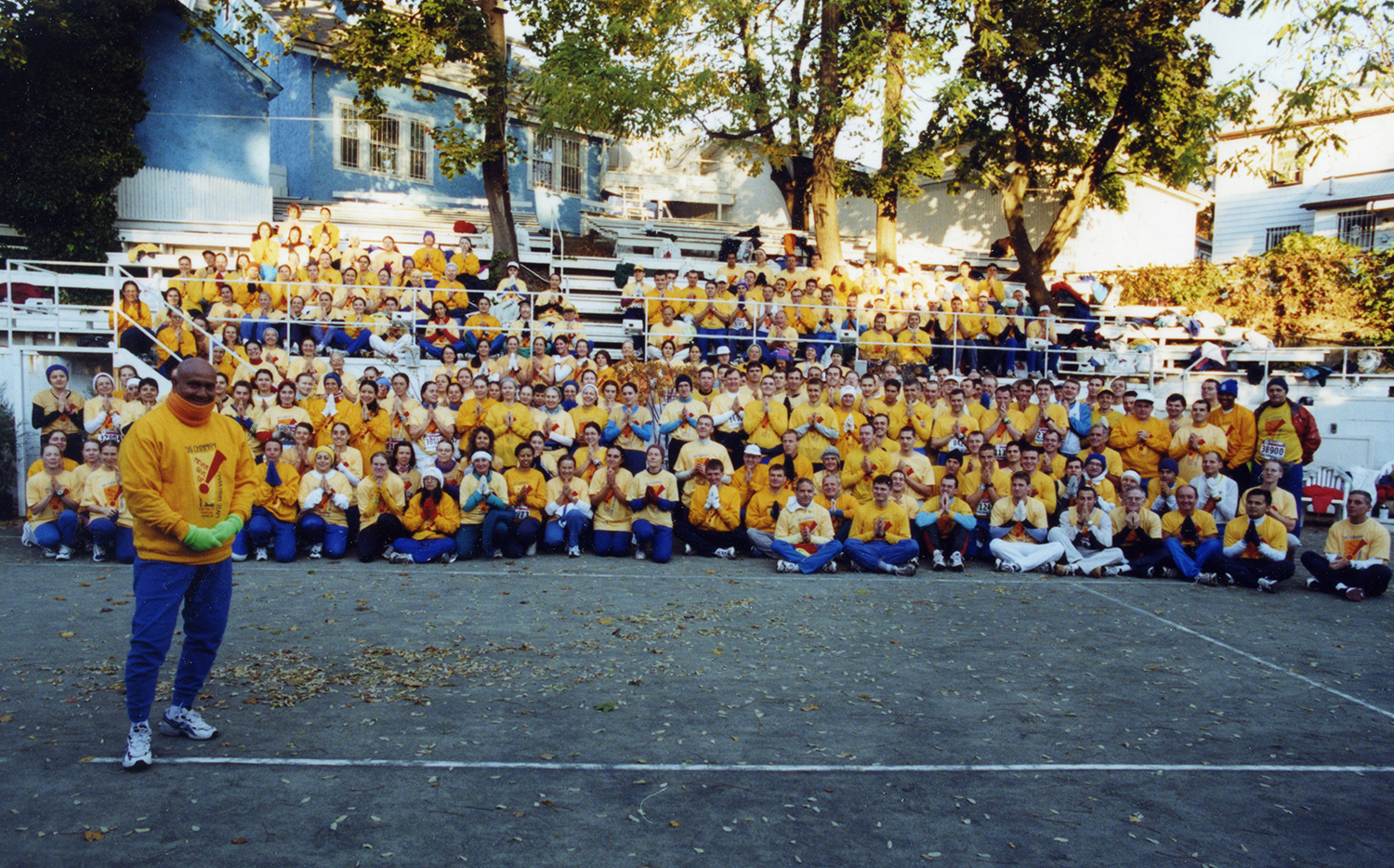
Sri Chinmoy’s students gather at Aspiration-Ground in Jamaica, Queens, to be with their spiritual teacher before they take part in the New York City Marathon. Emblazoned on the Sri Chinmoy Marathon Team uniforms are the words “Never Give Up!”

“You carry me through”

During the marathon, I was cheering the runners at different places on the course. One man came up to me, grabbed my hand and said, “Sri Chinmoy, every time I run a long distance, I think of you and you carry me through!”

And he was not a disciple. — Sri Chinmoy

The message of the t-shirt

During today’s marathon, Pulak wanted to give up. His T-shirt said, “Never give up!” An Indian man who was also running saw his shirt and advised him, “Do not give up!” Then he and Pulak finished the race together, talking philosophy for hours and hours. — Sri Chinmoy

Appreciating the marathon runners

All those who ran today’s New York City Marathon, please come and announce your times, from first to last. Only for the first person we will clap, and for the last person we will clap — the first person for their speed and the last person for their patience. In between, we will clap in silence; otherwise, it will take a very long time. — Sri Chinmoy, at an evening function at PS 86


Published in Run and Become, Become and Run, part 21


Race Prayer


My Lord,
You have given me Your own Eye
To see the world.
You have given me Your own Ears
To hear the world.
You have given me Your own Heart
To love the world.
You have given me all that You have
And all that You are
To give to the world.
My Lord,
Do give me one more thing.
Please, please give me Your own Feet
To worship You
Sleeplessly and breathlessly,
My Lord, my Lord.

– Sri Chinmoy


Sri Chinmoy offers this prayer at the conclusion of the weekly Saturday morning two-mile ‘Self-Transcendence Race’ held in New York.


Published in My Race-Prayers, part 2 


November 5


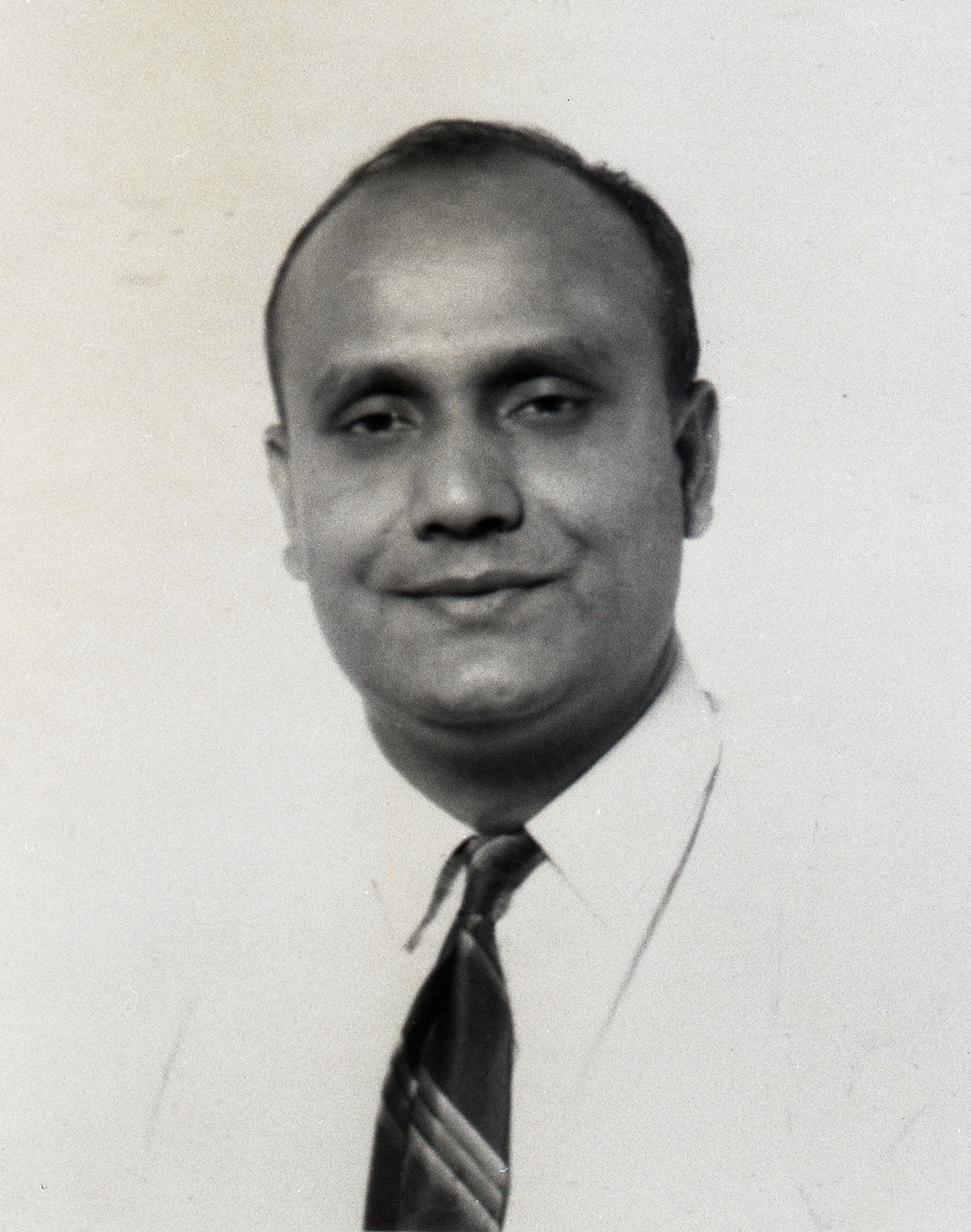
Sri Chinmoy’s passport photograph.


November 5


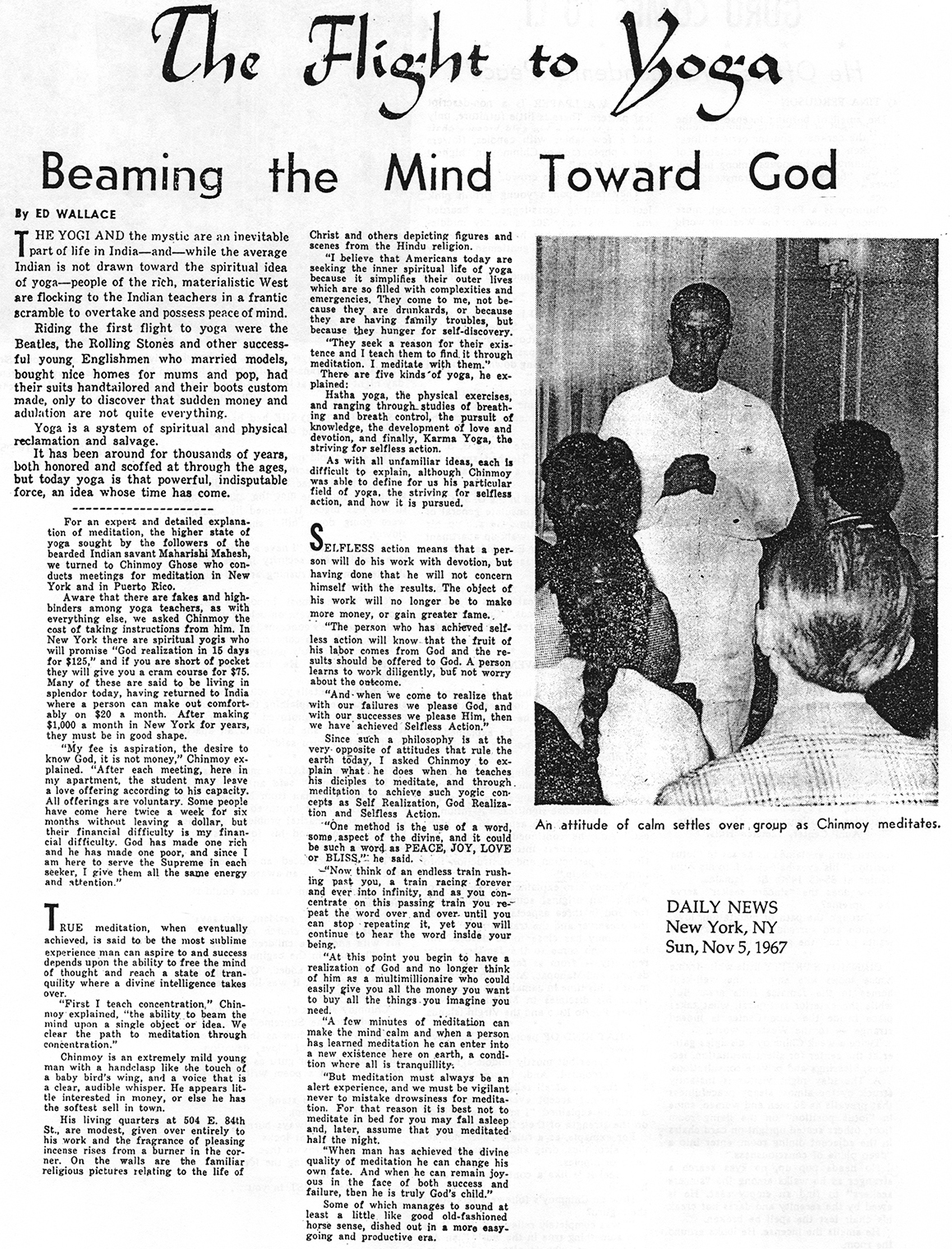
The first feature article about Sri Chinmoy, published in mainland USA, appears in the National Edition of the Sunday News, which has the largest circulation of any New York newspaper.


The Flight to Yoga

Beaming the Mind Toward God


by ED WALLACE 


THE YOGI AND the mystic are an inevitable part of life in India — and — while the average Indian is not drawn toward the spiritual idea of yoga — people of the rich, materialistic West are flocking to the Indian teachers in a frantic scramble to overtake and possess peace of mind. 

Riding the first flight to yoga were the Beatles, the Rolling Stones and other successful young Englishmen who married models, bought nice homes for mums and pop, had their suits handtailored and their boots custom made, only to discover that sudden money and adulation are not quite everything.

Yoga is a system of spiritual and physical reclamation and salvage. 

It has been around for thousands of years, both honored and scoffed at through the ages, but today yoga is that powerful, indisputable force, an idea whose time has come.

For an expert and detailed explanation of meditation, the higher state of yoga sought by the followers of the bearded Indian savant Maharishi Mahesh, we turned to Chinmoy Ghose who conducts meetings for meditation in New York and in Puerto Rico.

Aware that there are fakes and highbinders among yoga teachers, as with everything else, we asked Chinmoy the cost of taking instructions from him. In New York there are spiritual yogis who will promise “God realization in 15 days for $125,” and if you are short of pocket they will give you a cram course for $75.

Many of these are said to be living in splendor today, having returned to India where a person can make out comfortably on $20 a month. After making $1,000 a month in New York for years, they must be in good shape. 

“My fee is aspiration, the desire to know God; it is not money,” Chinmoy explained. “After each meeting, here in my apartment, the student may leave a love offering according to his capacity. All offerings are voluntary. Some people have come here twice a week for six months without leaving a dollar, but their financial difficulty is my financial difficulty. God has made one rich and He has made one poor, and since I am here to serve the Supreme in each seeker, I give them all the same energy and attention.”

True meditation, when eventually achieved, is said to be the most sublime experience man can aspire to and success depends upon the ability to free the mind of thought and reach a state of tranquillity where a divine intelligence takes over.

“First I teach concentration,” Chinmoy explained, “the ability to beam the mind upon a single object or idea. We clear the path to meditation through concentration.”

Chinmoy is an extremely mild young man with a handclasp like the touch of a baby bird’s wing, and a voice that is a clear, audible whisper. He appears little interested in money, or else he has the softest sell in town.

His living quarters at 504 E. 84th St. are modest, given over entirely to his work and the fragrance of pleasing incense rises from a burner in the corner. On the walls are the familiar religious pictures relating to the life of Christ and others depicting figures and scenes from the Hindu religion.

“I believe that Americans today are seeking the inner spiritual life of yoga because it simplifies their outer lives which are so filled with complexities and emergencies. They come to me, not because they are drunkards, or because they are having family troubles, but because they hunger for self-discovery.

“They seek a reason for their existence and I teach them to find it through meditation. I meditate with them.”

There are five kinds of yoga, he explained:

Hatha yoga, the physical exercises, and ranging through studies of breathing and breath control, the pursuit of knowledge, the development of love and devotion, and finally, Karma Yoga, the striving for selfless action.

As with all unfamiliar ideas, each is difficult to explain, although Chinmoy was able to define for us one aspect of his particular field of yoga, the striving for selfless action, and how it is pursued.

Selfless action means that a person will do his work with devotion, but having done that he will not concern himself with the results. The object of his work will no longer be to make more money, or gain greater fame.

“The person who has achieved selfless action will know that the fruit of his labor comes from God and the results should be offered to God. A person learns to work diligently, but not worry about the outcome.

“And when we come to realize that with our failures we please God, and with our successes we please Him, then we have achieved Selfless Action.”

Since such a philosophy is at the very opposite of attitudes that rule the earth today, I asked Chinmoy to explain what he does when he teaches his disciples to meditate, and through meditation to achieve such yogic concepts as Self-Realization, God-Realization and Selfless Action.

“One method is the use of a word, some aspect of the divine, and it could be such a word as PEACE, JOY, LOVE or BLISS,” he said.

“Now think of an endless train rushing past you, a train racing forever and ever into infinity, and as you concentrate on this passing train you repeat the word over and over until you can stop repeating it, yet you will continue to hear the word inside your being.

“At this point you begin to have a realization of God and no longer think of him as a multimillionaire who could easily give you all the money you want to buy all the things you imagine you need.

“A few minutes of meditation can make the mind calm and when a person has learned meditation he can enter into a new existence here on earth, a condition where all is tranquillity.

“But meditation must always be an alert experience, and we must be vigilant never to mistake drowsiness for meditation. For that reason it is best not to meditate in bed for you may fall asleep and, later, assume that you meditated half the night.

“When man has achieved the divine quality of meditation he can change his own fate. And when he can remain joyous in the face of both success and failure, then he is truly God’s child.”

Some of which manages to sound at least a little like good old-fashioned horse sense, dished out in a more easy-going and productive era.

Caption:

An attitude of calm settles over group as Chinmoy meditates. 


Published in the DAILY NEWS, New York, Sunday, November 5, 1967


November 4


Sri Chinmoy at the Jharna-Kala Gallery in San Francisco, California. The exhibition will continue through the month of November, in honour of Sri Chinmoy’s visit to the West Coast as well as the second anniversary of his Jharna-Kala style paintings.


A question asked at the exhibition opening:

Question: What is the best method to meditate on your paintings, i.e. to receive the most from them as a meditation?

Sri Chinmoy: Each painting has something to offer. According to one seeker one painting may embody more light than the other paintings. Now that seeker may think that it is light that he is seeing in the painting, but you as another seeker may come and find that particular painting abounding in peace. A third seeker may come into the gallery and see neither peace nor light, but power in that same painting. At that time, the seeker should dive deep within and see whether he needs light, peace or power. If you need to add more peace to your life, more than you already have, then at that time, try to invoke the peace which the painting embodies. If the other seeker who saw light in it wants to add more light to what he already has, then he should meditate on its light quality. If the third seeker wants to acquire more power, then he should meditate on the painting’s power aspect.

When he sees the painting right in front of him, he sees power. He concentrates on the painting and feels that it is not just a drop of power, but a flood of power, dynamic power, a running river with tremendous power. If it is a flood of power, a running reality that means the seeker is constantly creating something. Then he has to become one with the flow of the river. He has to become one with the flood of this power-consciousness. So if he sees power, then let him concentrate only on the power aspect of the painting. If he sees peace, then let him concentrate only on the peace aspect. If another person sees light, then he should concentrate on its light aspect, on the strength of his identification with the painting.

One should not see it as a piece of paper or the strokes of brushes or the physical medium of paint. No. Please feel that the painting is an intimate friend of yours. You can talk to him, chat with him, communicate with him because in him you have got a friend. For a long time you have not seen your friend, and now you can unburden yourself to him. Feel that you have to tell him everything that you have heard, that you have felt, since you last saw him. Each time you see a painting which you appreciate, please feel a long forgotten friend has just appeared before you. Now what happens when an old friend of yours comes to you quite unexpectedly? You get tremendous joy and you exchange your ideas with him; you exchange your feelings and experiences with him — everything you exchange. Each time you have this kind of exchange, you increase your light and delight. And believe me, you may feel that you are receiving something from the painting and the painting is not receiving anything from you, but this is wrong. It is a reciprocating friendship. Each time you appreciate the painting on the strength of your oneness, the painting itself increases its light-capacity.

I know there are many times when I have done this with my poems, with my paintings, with my music, with everything. Even after something is completed and being displayed, you can concentrate on the creation and increase its own achievements. When Aum Magazine, our monthly bulletin, first came out many years ago, say ten or twelve years ago, I had written articles to be printed in it and I did this same thing. After the magazine was printed and came back from the press, the first time I read it I had an experience. After I read it, I became totally one with each word, each idea, each ideal. With each experience that I had while reading it, I felt that I was giving new life to the article.

Something more: we look at a flower and our human mind feels that the flower has given us tremendous joy. It is true, but we have no idea as to how much joy we have given the flower itself. We have seen a flower and appreciated the beauty and the fragrance of the flower. We feel that out of its magnanimity, the flower has given us everything. But instead of using our capacity to appreciate the flower, we could have become jealous of the flower; we could have thought, “Oh God, you have made this flower so beautiful, why have you made me so ugly?” Instead of doing that, we became one with the beauty and fragrance of the flower and became inseparable friends with it. We gave the flower our best achievement, our sense of appreciation. What we had as our best quality, our best capacity, we offered to the flower or in the case of the gallery, we offered it to the painting.

When we give something cheerfully and devotedly, will it not be an added factor; will it not add to the reality that somebody or something is? The beauty of the flower definitely increases when we appreciate it. Our appreciation, sincere appreciation, means our conscious awareness, conscious oneness with the reality that we call a flower. So here also when you look at a painting and you appreciate it, please feel the beauty, inner beauty, subtle beauty of the painting. If you can soulfully appreciate it, then the reality of the painting has definitely increased. I have done it many, many, many times with my writings and my paintings and my own creative life.

So here the game is not one-sided — that somebody does something and you appreciate it and your part is over. No. You have given joy to yourself by seeing it. But you have no idea how much joy that particular object that creation of God, has received from your soulful appreciation. Here appreciation is the expression of conscious oneness. So if you see power in a painting, then please identify yourself with that power aspect. You will not see the paper, or the painting, no, nothing. You will only see a consciousness-reality of God which at the present moment you are calling power and somebody else is calling light, and still another is calling peace or delight. Do not let the mind function at that time. Simply enter into the consciousness-reality of it and become that aspect.


Published in AUM – Vol. 3, No. 11, November 27, 1976


November 4

Mediation and Meditation

A talk given by Sri Chinmoy in the
at the Dag Hammarskjöld Auditorium,
United Nation, New York

Two conflicting parties: they need some compromise. A third party, the mediator, is then of paramount importance. His is the task of offering light to the conflicting and strangling parties. When the mediator is successful in his acts of mediation, the two conflicting parties end their mutual enmity and hostility. They live, or at least try to live, peacefully, in their own domain.

Two conflicting parties: one party declares might is right; the other party declares right is might. We observe in the Mahabharata, India's greatest epic, that the Kauravas proclaimed that might is right, and the Pandavas maintained, in the light of conscience, that right is might. We all know that the Pandavas won the battle.

The animal in us instigates us by roaring that might is right. The human in us inspires us by feeling deep within that right is might. The divine in us illumines us by offering the supreme Truth that it is God alone who has all Might and who is all Right.

When we look at the unlit consciousness found on the human level, we see something quite disappointing and damaging. We see that this unlit consciousness is very often unthinking, unaspiring and possessing. At this point, we have to invoke the Grace of God. It is the Divine Grace that can transform the unthinking consciousness into the thinking, the unaspiring consciousness into the aspiring and the possessing consciousness into the renouncing.

Here on earth, since everything is fleeting, if we can derive a little joy, a little peace, a little harmony from mediation, our mental wisdom, we should be proud of our achievement. At a certain stage in human development, when most of the people are not aspiring to be perfect, mediation is of great importance. Therefore we must pay attention, reverential attention to mediation. It is a temporary mental relief, a pause, a rest in the life of the vital. It is a clever compromise. But to expect abiding peace and illumining fulfilment from mediation is simply absurd. We cannot expect lasting peace and we must not expect everlasting, illumining fulfilment from mediation. For that we need meditation.

We are now at the United Nations. The United Nations is the mediator unmatched and unparalleled in today's world:

The Secretary-General and his special representatives have assisted in finding solutions to problems in a number of areas. The Secretary-General's efforts assisted the Government of the Soviet Union and the United States to avert a serious threat to the peace which arose at the end of 1963 in the Caribbean. In the Dominican Republic crisis in 1965 a representative of the Secretary-General, appointed at the request of the Security Council, helped in securing a cease-fire. The fighting between Israel and the Arab States that followed the eruptions of the Palestine partition — the partition plan in the establishment of the State of Israel — was halted by a United Nations cease-fire. Then following negotiations carried out with a United Nations mediator, armistice agreements were signed in 1949. Peace Corps observers have been in the area ever since, supervising the armistice agreements.*

These achievements are unique in the physical world, in the vital world, in the mental world and in the psychic world. Unfortunately these achievements may not, or do not or cannot last. We have seen the First World War, the Second World War. There should not be, at least for God's sake, a Third World War!

Very often animal aggression gives birth to human aggrandisement. This human aggrandisement is chased by bitter frustration. Then, later on, human aggrandisement is devoured by utter destruction.

In the spiritual life, in our inner life, we also see two conflicting parties: fear and doubt on one side; and inner courage and faith on the other side. Meditation plays three distinctive roles in the inner life. Meditation is the medicine; meditation is the doctor; meditation is the cure, the ultimate cure. Meditation cures our fear. It transforms our fear into strength, adamantine will. It transforms our doubt into constant, unmistakable and inevitable certainty. Again, we see that meditation is the road, meditation is the guide and meditation is the Goal. He who is surcharged with inner courage and faith will get constant help and illumination from meditation. Further, let us not forget that meditation is the only road, the only guide and the only Goal.

In the outer world, the blind human body needs constant mediation. The wild human vital needs striking mediation. The unclear human mind needs illumining mediation. The weak human heart needs lasting mediation.

In the inner world, the fleeting, unaspiring human body needs constant meditation. The running, struggling vital needs striking meditation. The searching and climbing human mind needs illumining meditation. The crying and aspiring human heart needs everlasting meditation.

In the outer world, in this world of turmoil, mediation is necessary. In the inner world, in the world of frustration and despair, meditation is necessary. If we can bring the result of meditation to the fore, mediation will have a life, a different life, a new life that will be flooded with everlasting Peace, Light and Bliss.

In the fleeting, in the finite, we shall hear the message of the Eternal and the Infinite.

I wish all of us to stand up and pray to God most sincerely and soulfully for our dear Secretary-General U Thant's quickest recovery.

[Secretary-General U Thant was in the hospital at the time this talk was given. Everyone stood up and prayed with Sri Chinmoy for five minutes.]

* Excerpt from United Nations Office of Public Information booklet.


Published in The Garland of Nation-Souls


World Peace Literature Award 

Sri Chinmoy receives the award from Professor Charles Johnson
at the University of Washington in Seattle, Washington


Excerpt from welcoming remarks at the Peace Concert by Professor Charles Johnson of the University of Washington, winner of the National Book Award:

All of Sri Chinmoy’s works are a form of worship, whether they are in the fields of music or writing or literally uplifting others in the world.... I believe that the great creative productivity of this man illustrates for us all that any man or woman devoted to the life of the spirit will bring forth gifts of beauty and redemption in numerous genres and fields of artistic endeavour. Like Gandhi, like Mother Teresa, like Martin Luther King, Jr., Sri Chinmoy’s presence and work among us have enriched all of our lives.


Published in My Prayerful Salutations to the United Nations


November 4

Competition as a Human Condition

Sri Chinmoy answers a question put to him in San Francisco, California


Sri Chinmoy: When competition is based on separativity, it gives us a deplorable experience. If there is a sense of separativity, I see you as one individual and myself as another. If I want to compete with you, unconsciously or consciously I may adopt foul means, and vice versa. At that time we have totally forgotten our higher inseparable oneness.

So when we try to compete with others in this way, when we feel that we are one existence and someone else is another existence, at that time competition does not help us at all. Here we are singing the song of separativity, and separativity is something that can never give us abiding joy or satisfaction. The sense of separativity is nothing short of confusion, and confusion and destruction are intimate friends.

But there is another kind of competition which is self-excellence. Here one tries to transcend one's own achievements. It is done only in one's own consciousness, in one's own reality. Yet inside one's own reality, the universal Reality is there; you, he, she, everybody is there.

Suppose I was assailed by doubts for three hours yesterday with regard to the world in general. Today I will try to compete with my own reality not to have so much doubt. Today I will try to take the side of faith and I will try to develop more faith in my existence. Here I am competing with myself, with what I had and what I was yesterday. I am not adopting any foul means. I am not trying to conquer others or lord it over them. Far from it. As a human being, I am in ignorance; teeming ignorance has covered me. But I am trying to disperse these clouds of ignorance forever. If I compete with my own capacity and bring more illumination to the fore from within, then I can transform my nature, expand my capacity and fulfil God's Will more devotedly and unconditionally. This kind of competition is worth doing.

I am always competing with myself, with my lower self. I am trying to bring my higher self to the fore in order to illumine my lower self, so that eventually there will be no lower self at all; it will be all higher self, all a self of total illumination. This kind of competition, according to me, is good. I am not involving others and I am not adopting any foul means. Here I am competing with my own achievements in order to make progress. And progress — transcending effort and continuous progress — is what we need.

Progress is a relative term. What you call perfection, I may not call perfection. Perfection is satisfaction, and each individual's idea of satisfaction is different. A child throws a ball against the wall and breaks something. He gets joy and that is his perfection. You stand in front of a child with a piece of candy and beg him to take it, but he has no time. He runs some place else because his time is so precious. He does not collect the piece of candy from you. That is his satisfaction.

In the spiritual life, the seeker's perfection, which is satisfaction, comes from his constant, self-transcending achievement. We sing the song of self-transcendence. We know in the process of evolution how high we have climbed the reality-tree. If yesterday we climbed to one branch, today we will try our utmost to devotedly climb one branch higher. This eagerness, this intense cry to transcend oneself, is true satisfaction.

I always say that the goal is not static; the goal is an ever-transcending reality. Satisfaction is our goal, but we see that the goal itself is climbing high, higher, highest and running far, farther, farthest and diving deep, deeper, deepest.

A child's goal is to learn the alphabet. Then his goal becomes kindergarten, primary school, high school and college. And when he completes his university course, if he is sincere, he comes to realise that there is much more, infinitely more, for him to learn. Once a university student was boasting of his achievements. He said to Mother Earth, "I have completed my course. So look at me, look at what I have achieved." But Mother Earth said, "My son, you have just learnt the first letter of the alphabet. Now sit down and learn the rest."

The goal is constantly going high, higher, highest. Whatever we achieve can be today's goal, but it can never be tomorrow's goal. Tomorrow's goal is something infinitely higher, infinitely more illumining and infinitely more fulfilling. Perfection, which is satisfaction, is nothing short of constant self-transcendence. So here I wish to say that we do compete, but we compete with ourselves, with our own achievements, not with others.


Published in Sri Chinmoy, The Inner Meaning of Sport


Sri Chinmoy lifts Tegla Loroupe — long-distance world record holder in 25km, 30km and marathon, and the first African woman to win the NYC Marathon — at Aspiration-Ground in Jamaica, Queens, New York.


May God give you all the power ... to lift the world and make people understand what peace and love mean. — Tegla Loroupe


November 4

Photo: Lelihan Browne


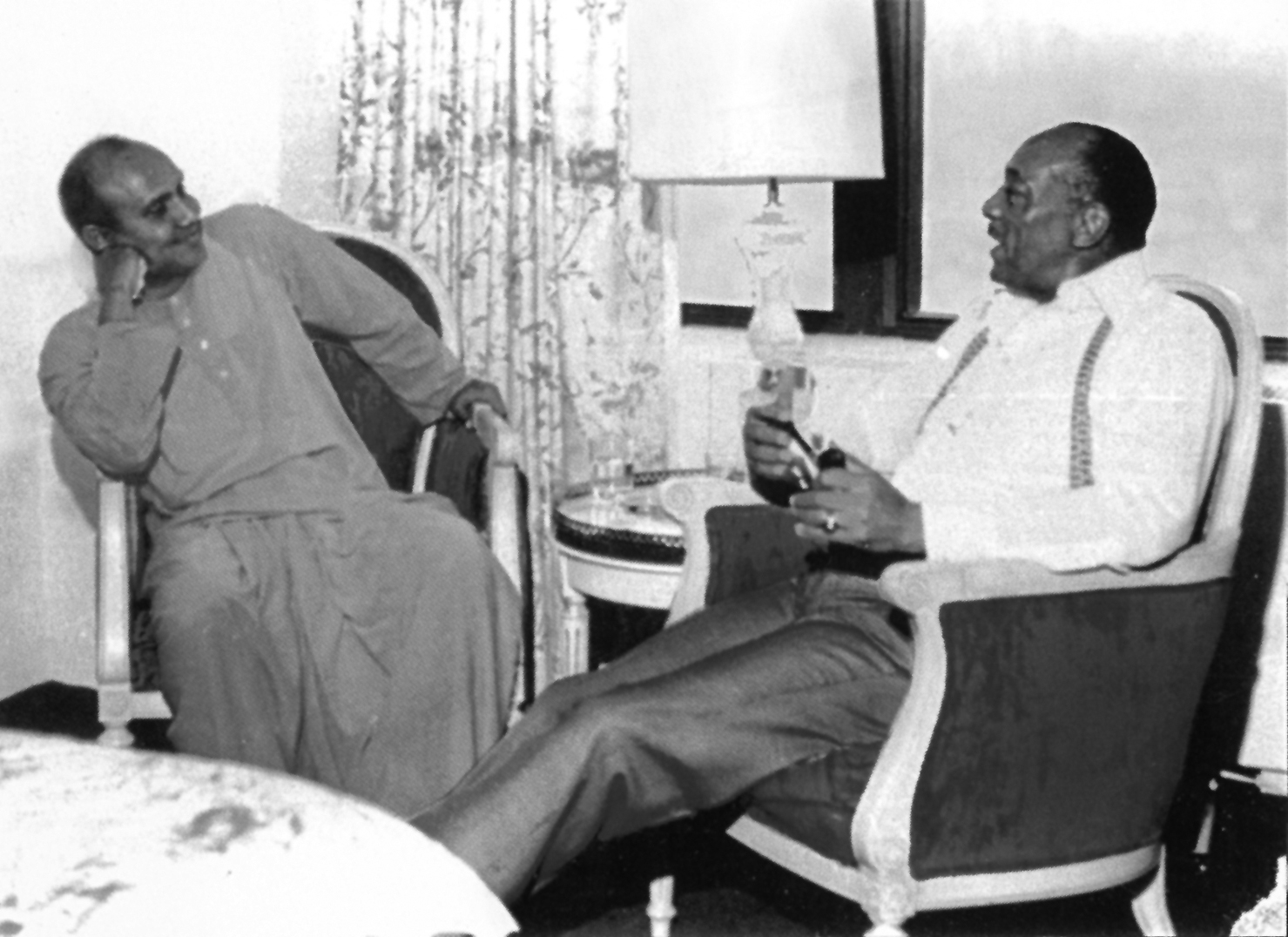
Sri Chinmoy meets with his lifelong athletic idol Jesse Owens – the hero of the 1936 Berlin Olympics and winner of four track-and-field gold medals – at the Park Lane Hotel in New York. Read the article...


Following is an excerpt from their conversation, which lasted for two hours:


Sri Chinmoy: Once upon a time, I happened to be an insignificant athlete. But you are the world-renowned, immortal Jesse Owens, and my admiration for you, right from my adolescent years, has remained pure and unalloyed.

Jesse Owens: … I think that if one has love and feeling, then everything can come about. It takes a lot of dedication to be able to live it… What I want to do, first of all, is please my God. Then I want to please the people who helped me… Everybody is struggling to get on top of the mountain. But you have got to remember one thing when you reach the top: you have got to come back to the valley to keep in contact with what’s going on down in the valley.

Jesse Owens: I believe very much in what you do. I am an admirer of yours. I love what you are doing.


Published in Kofi Annan: Cynosure-Eyes


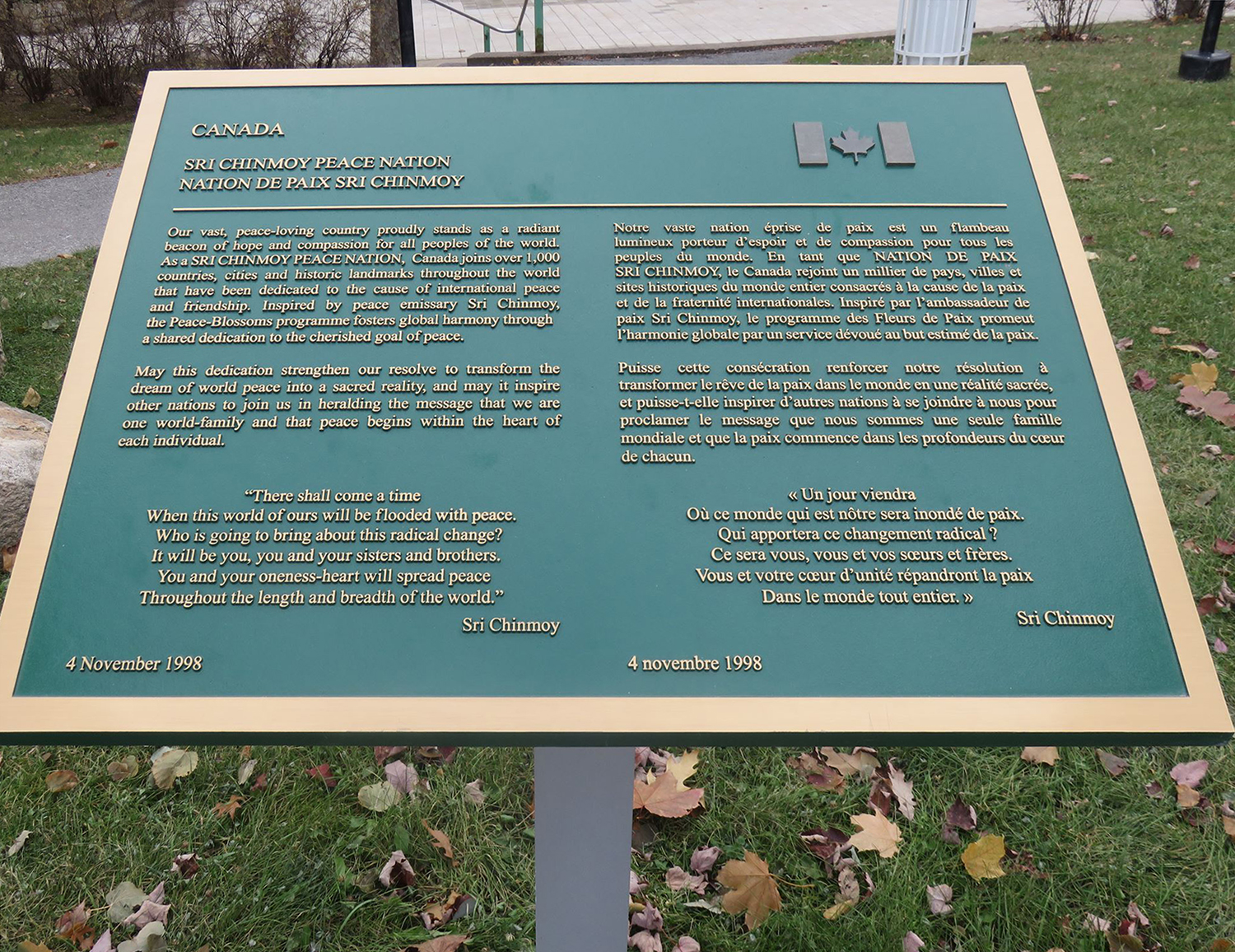
Canada is declared a Sri Chinmoy Peace-Blossom-Nation. The plaque is located in the plaza in front of Ottawa City Hall.


November 4


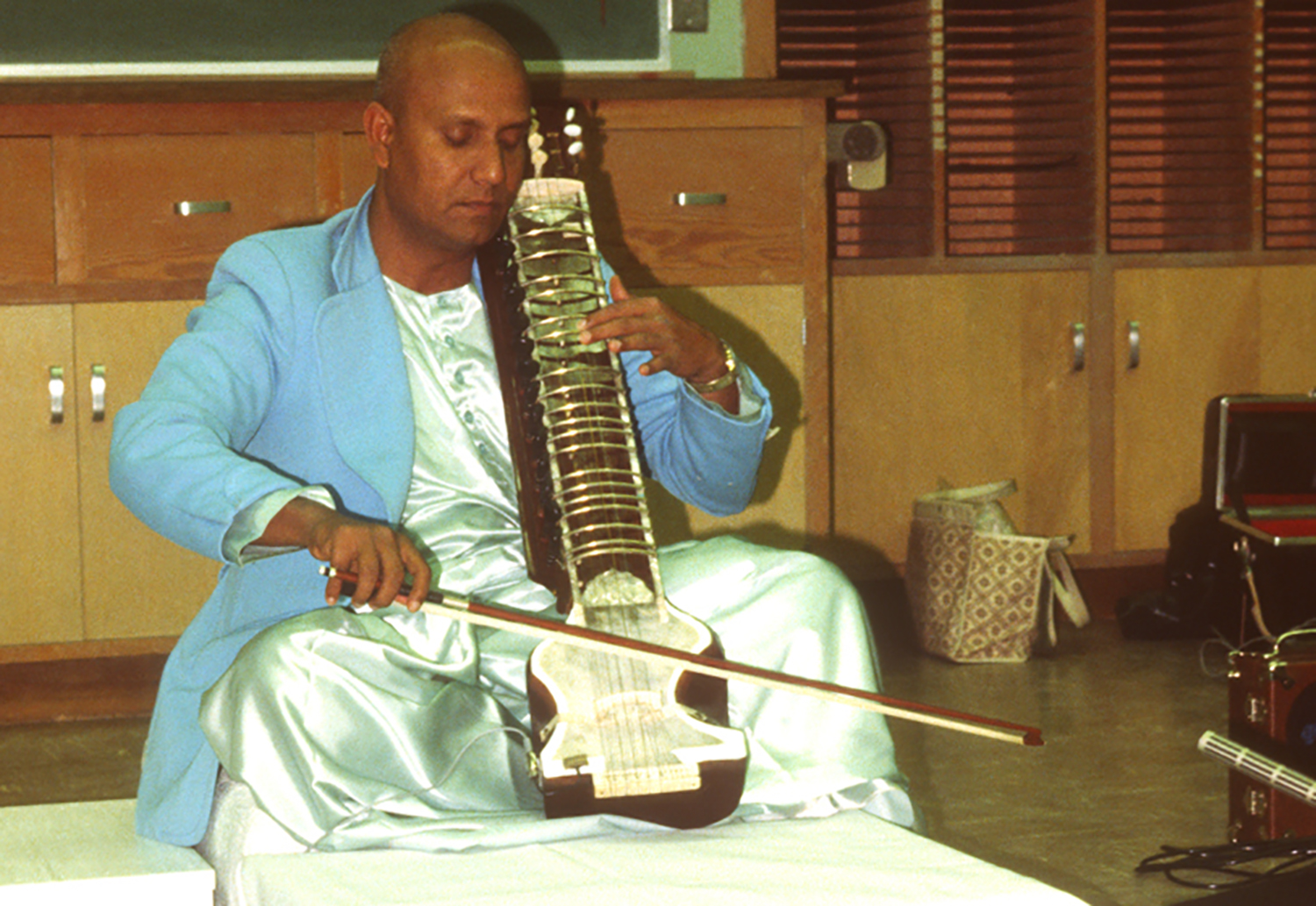
Sri Chinmoy plays the esraj at the second ‘Sri Chinmoy Sangit’, a musical performance by Sri Chinmoy and his students, at Lowell High School in San Francisco. (The first Sri Chinmoy Sangit was held in the Commonwealth of Puerto Rico in October 1976).


Sri Chinmoy makes the following comments and presents awards to the musicians who gave the best performance of his music.

Sri Chinmoy: It was a great pleasure and honour for me to hear the music played by you so soulfully and adequately. Therefore to each musician I offer my soulful love, joy and gratitude. I pray to God the Supreme Musician to grant each musician more capacity, abundant capacity, infinite capacity so that each of you can grow into a master-musician. Again I wish to offer my gratitude from the very depth of my heart to each of you.


Peace Concert

by Sri Chinmoy
held at University Temple United Methodist Church Seattle, Washington


Excerpt from welcoming remarks at the Peace Concert by Professor Charles Johnson of the University of Washington, winner of the National Book Award:

All of Sri Chinmoy’s works are a form of worship, whether they are in the fields of music or writing or literally uplifting others in the world…. I believe that the great creative productivity of this man illustrates for us all that any man or woman devoted to the life of the spirit will bring forth gifts of beauty and redemption in numerous genres and fields of artistic endeavour. Like Gandhi, like Mother Teresa, like Martin Luther King, Jr., Sri Chinmoy’s presence and work among us have enriched all of our lives.

Excerpt from a letter from Mr. Norman B. Rice, Mayor of Seattle:

I am honoured to acknowledge you, Sri Chinmoy, as a renowned ‘Ambassador of Peace’ and as one of the Premier First Citizens of the World.

You have lived an exemplary life devoted to fostering the oneness of people throughout the world. By offering countless individuals of many nations the opportunity to discover the wellspring of peace that lies within themselves, you are creating the foundation for a lasting world peace. Your example is an inspiration to us all.

Peace Concert dedication by Sri Chinmoy:

Today’s Peace Concert I am prayerfully, soulfully and self-givingly offering to the all-illumining soul, all-aspiring heart and all-serving life of the United Nations.


Published in My Prayerful Salutations to the United Nations


November 4

Photo by Pulak Viscardi


Sri Chinmoy rides on one of the friendly elephants he lifted at the Big Apple Circus at Lincoln Center in New York City.


November 3

Is God Really Partial?

A short story by Sri Chinmoy

"Master, you are compassion incarnate. May I ask you something about God's Compassion that has been bothering me for a long time?"

"Please ask me, my daughter."

"You have always said that God is impartial, but it seems to me that God shows more Compassion to those who have entered into the spiritual life than to those who have not. Don't unaspiring people need more Compassion and Consolation from Him, since they are even more helplessly caught by ignorance than spiritual seekers?"

"My daughter, you are correct in saying that God favours spiritual seekers. But you are wrong when you think that those in the ordinary life need more Compassion. They do not need or want God's Compassion."

"Master, what do you mean?"

"When one begins to aspire, at that time all his bad qualities are being gradually transformed and illumined and all his good qualities are being brought to the fore. So even if there is just a little aspiration, Compassion works. But if there is no aspiration, if there is no seed planted in the ground, then when God's Compassion rains down, it is all wasted. Also, if there is no aspiration, the word 'compassion' is not even in the person's dictionary. Those who are still living in the world of aggression do not need anybody's compassion. So why should God give them His Compassion? For them the law of Karma is operating; for them God uses the Light of His Justice."

"But Master, aren't unaspiring people sincere in their own way?"

"My daughter, some people have very good intentions, but that does not lessen their ignorance-life. I may tell a lie and repeat it ten times forcefully with the idea that I am telling the truth. But this kind of sincerity does not help us at all."

"But Master, are we really any better than those still in the ordinary life? Even now I can think of hundreds of things I did wrong just yesterday."

"Before we entered the spiritual life, we led semi-animal lives; but we were not conscious of the fact. Now that we have entered fully into the spiritual life, we see that we are really half-animal. Inwardly we strangle many people, although outwardly we may smile at them and shake their hands. We fight, we are jealous; every day we do countless undivine things. But at least we are fully aware of the things that we do wrong."

"What about the mistakes we still make, Master?"

"Spiritual people know they are making mistakes, but every time they take the side of Light. If you have good intentions and on the way you stumble, God sees that your intentions are good. You still need more strength, inner strength, but you will get this one day. Although you are helpless, hopeless and useless, you have an inner urge to please God in His own way. The very fact that you have entered into the spiritual life pleases God."

"So this is why God shows us extra Concern?"

"Yes, my daughter. He is always compassionate. Even His Justice-Power used with unaspiring people is Compassion, because it perfects them and makes them want to give up their undivine ways. But for seekers who want to please Him devotedly, soulfully, unreservedly and unconditionally, He has more Compassion. If you are trying to do the right thing and I am not, who will deserve more Compassion? God's Compassion-magnet will be able to pull you more. If I am not as sincere as you, then I cannot expect to receive the same amount of Compassion-food from God. So although the seeker is bound to make mistakes, in his case God's cosmic Law will give way to God's Compassion-Smile.

"Master, if we know that God showers extra Blessings and Concern on us, how can we prevent ourselves from feeling superior to others or judging them?"

"Let me explain it to you, my child. If somebody is not aspiring, it must not affect you. Again, if somebody is aspiring much more than you can, why do you have to be involved? If you see someone who is not aspiring and you become full of pride, then you are ruined."

"How can we stop pride from entering us, Master?"

"If you walk along the street and see that somebody is not leading a spiritual life, you should remain detached. It is one thing to see something and another thing to feel that you are superior. Why do you have to make a judgement?"

"So, Master, how should I feel when I am with my friends who are not aspiring?"

"If you mix with these friends, don't feel superior or inferior. Try to act in your own way. Your friend wants to eat a food which satisfies him, and you want to eat a particular food which satisfies you. He wants to eat the food of idleness and you want to eat the food of aspiration and dedication. If you say that your food is more nourishing than his, then you are judging him. Just feel that you are approaching your reality in a different way."

"Can I be absolutely sure, Master, that I am not judging my friends?"

"My child, you have to know what you feel within. If you feel superior within, that is judgement. Any feeling of superiority or inferiority is judgement. So if you don't have any feeling of superiority, then there is no judgement. Feel that your friend has every right to lead his own life. You are going to be responsible for your own life and you are not going to be responsible for his. Eventually you will stop mixing with your old friends and remain with spiritual people whenever you have an opportunity. Have you understood my philosophy, my daughter?"

"Yes, I have understood you, Master. You have illumined my mind and heart with your compassion. You always answer your spiritual children's inner and outer questions. But the main thing we learn, Master, is that our spiritual father is all compassion and all concern for us. You are always compassion incarnate."


Published in Is God Really Partial?
 

The Interim Master

A short story by Sri Chinmoy

One day a very great spiritual Master was approached by the brother of one of his closest disciples. "You know, Master, that I have my own spiritual Master, even though I have always had the greatest admiration for you. I accepted my Master long before you came to this city and I have always remained faithful to him. But now my Master has said that he cannot teach me any more and he wants me to go to somebody else. For all these years I thought that he was the Master I was destined to have. Now I have entered into a sea of confusion, so I have come to you for advice."

The Master said, "You are correct that one is predestined to meet one's Master. If you have an inner cry, then you are bound to get your Master. When you find the person, you are fortunate. But owing to circumstances, you may not find your Master right away."

"Then all the years I spent with my other Master are wasted?" asked the youth.

"No!" said the Master. "Nothing is lost. But you have to see the situation with true detachment. When you come to someone who you feel is not your true Master, you have to feel, 'For the time being, for a few months or a year, let me learn what this particular Master knows.' This way you will not be sad and disheartened. And even if the person is not your real Master, you will learn something from him."

"Then what should my attitude now be to my ex-Master?"

"If you realise that this Master is now taking you to someone else, then go to a new Master; but do not criticise the old Master. Your sincerity is your safeguard. It will ultimately take you to your destined Goal."

"But, Master, since I was mistaken the first time, how will I actually know who is really my Guru?"

The Master said, "Please enter deep within when you go to a spiritual Master. You may get an inner experience and feel in the inner world that he is yours. Then see if you can have implicit faith in this particular Master. You may look a long time and you may see many Masters, but you will prefer one over the others. The Master whom you prefer, the one with whom you will have an inner connection, a deep affinity, is your Master."

"What exactly will happen when I see him, Master?" asked the seeker.

"First of all you will get a kind of inner thrill and you will not be able to account for it. Your mind will not be able to give an adequate explanation, for the experience is a spiritual one and it takes place far beyond the mind. You have to be the judge. If you go to a spiritual person and he gives you abundant joy, boundless joy, then you will know that he is your Master."

The seeker said, "I am grateful that you are making everything so clear to me. Now, please tell me, Master, for a little while should I follow both my old Master and the new one that I accept?"

"My son," said the Master, "that is like placing one foot in one boat and the other foot in another boat. In the spiritual life two boats cannot be the same and the two boatmen need not follow the same route. It is not like going to school where you take different subjects and have many teachers. In the spiritual life there is only one subject and that is called God-realisation. So you have only one teacher. Your own Master can easily take you to the destined Goal provided that you have faith in him."

"So the way my Master taught me was not wrong, but just different, is that right?"

"Each Master is right in his own way. The destination is always the same and all roads lead to there, but you will prefer one particular road. If you get the wrong Master, you move with the speed of an Indian bullock cart. You are bound to make progress, but your speed will be slow. But if you go to the proper Master, then he will carry you like a jet plane. If you are lucky, you will find the right Master and then naturally you will fly with the speed of an aeroplane."

"Master, during our whole conversation, I have been drinking in your Peace, Light and Bliss. This whole time I have been experiencing such an inner thrill and joy. Master, may I tell you a secret?"

"Certainly, my son."

"I came to you because my heart knew that you were my true Master, but my mind was still confused. You have illumined my mind and you have fed my heart and soul. Master, will you accept me as your disciple?"

The Master blessed the youth. "I accept you, I accept you, my son. You will be my true disciple, my dearest spiritual son. Now you have found your real spiritual home and I shall definitely take you to your destined Goal."

Published in Is God Really Partial?


The Desperate Seeker

A short story by Sri Chinmoy

About fifty years ago, there lived in America a spiritual Master who had about forty or fifty disciples. This Master was always ready to give interviews to his disciples and to other sincere seekers who came to him for spiritual guidance.

One day he was visited by a young writer who had written to the Master previously about his problems. On this day he had a particular problem that he wished to discuss with the Master.

"Master, please help me," said the young man. "For the past two weeks or so, I have hardly been able to get any sleep. I have never meditated very much. I always felt that mental activity was more fulfilling. But almost every night now I wake up with a desperate feeling in my heart. All of a sudden I feel that I am in desperate need of spirituality. I have tried in vain to understand this feeling. My mind does not seem capable of analysing it. However, since I cannot see clearly with my mind what is happening to me, I am worried that I may be suffering from some delusion. Can you help me? Is this desperate feeling that I have dangerous to my mental health?"

The Master replied, "No, it is not at all dangerous. You are crying for the fulfilment of your inner cry. It is not with the mind that you are crying; you are crying from the inmost recesses of your heart. The inner heart has infinite capacity. It is not limited like the mind. One does not approach the highest Truth with the mind; therefore, mental health does not come into the picture at all."

"But why am I feeling this cry, Master? What am I really crying for?"

"When we cry deep within," the Master said, "it is because we feel the necessity of Peace, Light and Bliss. When we have this kind of inner cry, then these qualities either come to the fore from within or descend from above. I tell my disciples that they can develop the inner cry by giving more importance to what they really need in their life. When we give importance to our true necessity, then automatically our inner cry, our inner sincerity, is bound to increase. The more we feel that we desperately need Peace, Light and Bliss, the sooner our inner cry increases."

"How can we fulfil this necessity?" asked the seeker.

"In the outer world, when we are hungry we try to fulfil our hunger. If there is no food at home, we go to a restaurant or to a friend's house. Similarly, in the spiritual life when we are really hungry for Peace, Light and Bliss, we will go to a spiritual Master who can fulfil our hunger. First of all he will increase our inner hunger and then he will fulfil it."

"But what about my lack of sleep? Is this harmful or unhealthy?"

The Master explained, "If we have Peace, Light and Bliss within ourselves, then these divine qualities will not tell upon our health. On the contrary, they will strengthen the physical. The physical will have a new sincerity, a new faith in fulfilling the divine in us. The term 'sincerity' is very important. If we want to achieve Peace, Light and Bliss by hook or by crook, if we try to use physical force or vital force, if we try to push and pull, then we will unduly create problems in our mind. But if we rely on our inner cry, then our sincerity will carry us up to the Highest. At that time, the divine protection will be there. It will not allow us to have any mental problems."

"How can I become really sincere, Master? How can I tell if I am sincere?"

The master reassured him, "In your case, you have sincerity. But sometimes, although we are sincere, we still try to pull or push. We try to expedite our progress with our vital energy instead of relying on our own inner sincerity. When we have a sincere inner cry, we come to realise that it is the inner being that is crying in us and for us. And when the inner being cries, our outer mind need not and cannot be affected. It is only when we try to achieve something through our outer mind that the, mind will be affected, because it is not ready to receive these qualities in a divine way.

"Master, may I ask one last question? Patience is also a divine quality. I am afraid that with this feeling of desperation, impatience will come."

"If you know what patience is," the Master said, "then it is very easy to have patience. If you feel that you can be patient only for a certain length of time, then you will be impatient when the time is up. If you think that in two days you will realise God, then if God is still hiding from you after two days, two months, two years, then you will become impatient."

"How can one cultivate patience?" the writer asked.

"You should feel, 'I shall realise God at His choice Hour. My part is to pray and meditate and it is God's part to grant me realisation when He feels the time is ripe.' If you feel this, then patience will come. You are responsible only for your prayer and meditation and you give the responsibility for the result to somebody else, who is God. God has only asked you to pray and meditate; He has not set a time for you to come and visit Him. We each must take care of our own business. Time belongs to Him, but prayer belongs to you. In this way, you can be divinely patient."

"Master," said the young man, bowing with utmost humility, "you have not only answered all my questions today, but you have given me the answer to all my life's questions. From today, my heart's inner cry will be my only reality."


Published in Is God Really Partial?