Indian Stories
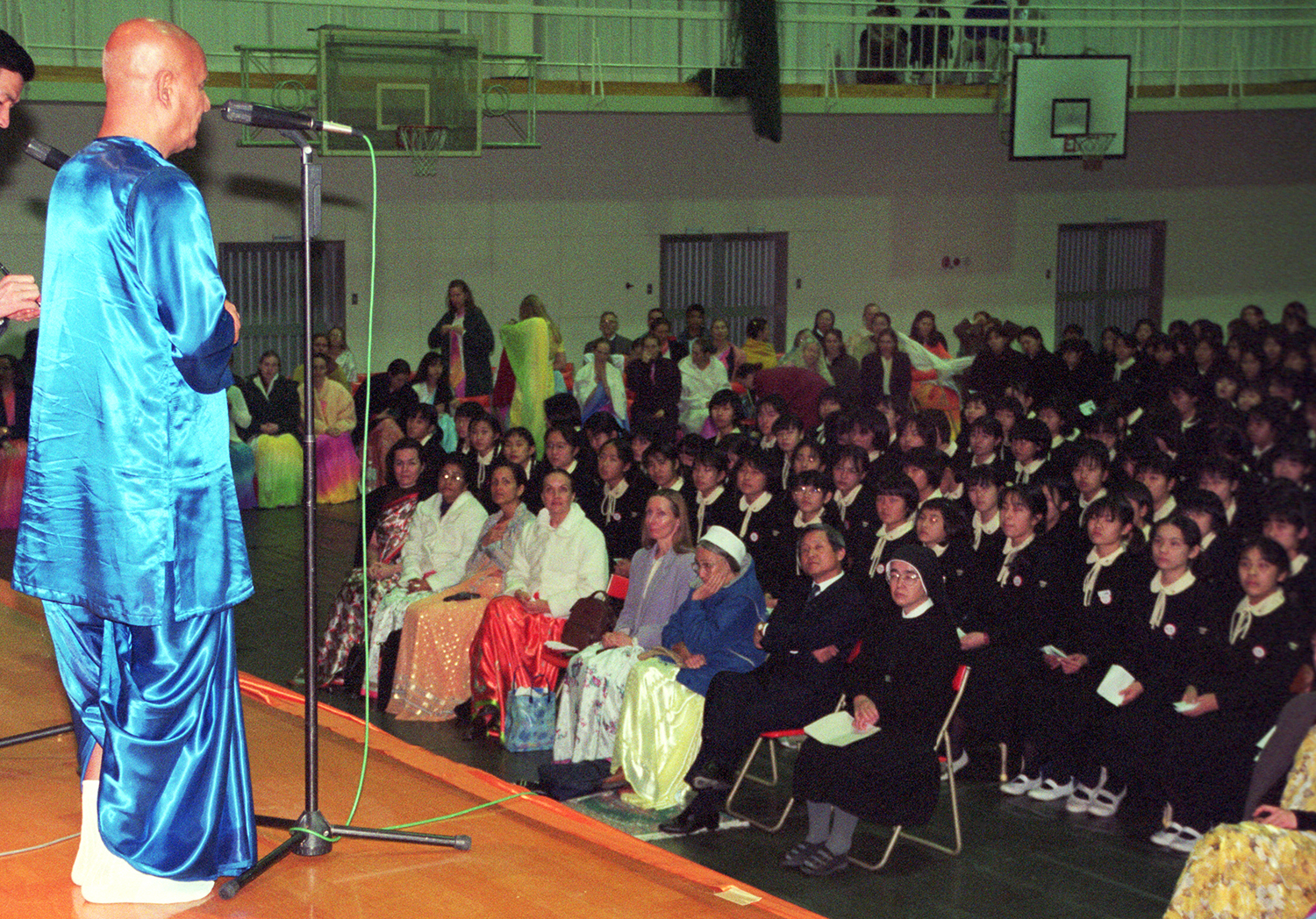
by Sri Chinmoy
The Governor-General of India was an Englishman named Lord Bentinck. He was very strict and everybody was frightened to death at the very mention of his name.
Raj Rammohun Ray at this time was very well known as a man of knowledge and a great patriot. He was also a linguist who knew many languages.
One day, the Governor-General sent a messenger to Rammohun with the message: “The Governor-General wants to see you immediately.”
Rammohun said to the messenger: “I know he is the Governor-General of India, but that does not mean that I have to listen to him and come immediately.”
The messenger was shocked. “What do you mean?” he said.
“I will come if I have to, but in my own time,” said Rammohun.
“I cannot believe this,” said the messenger. “Even in my dreams I would not be able to believe this kind of thing. You Indians are at our feet, and yet you are acting so proud and haughty. You will see what kind of punishment you will get from Lord Bentinck.”
Rammohun only said, “I am fully prepared. I know what kind of punishment I shall get, but also I know what I have to do with a foreign boss.”
On hearing the story, Lord Bentinck became furious. But he said to himself, “By becoming furious, what am I going to accomplish. I need some help from Raj Rammohun Ray, so let me be wise. Since I am the needy one, I have to be very careful.”
He wrote a very polite letter to Rammohun: “I am ready to see you at any time that is convenient for you. I will send my car to bring you here. Please let me know when you can come. I will be extremely happy and honoured to receive you.”
The messenger came with the letter, and as soon as Rammohun read it, he said, “I am ready to see the Governor-General.”
Rammohun explained to Bentinck when he saw him, “My skin may be dark, but I do have my own sense of prestige. You asked for me to come to see you immediately, but I did not come because my pride and prestige were hurt. When you wrote me a polite letter, then I felt sympathy for you. You may feel that the Indians are inferior, but you cannot treat us in that way.”
The Governor-General shook hands with Rammohun and agreed, “I know it is absolutely necessary to preserve one’s prestige. It was wrong on my part to address you in that way.”
Rammohun said, “Your nobility has touched the very depths of my heart.”
Wherever Rammohun went, he played the role of a leader most successfully. Everybody admired and adored him. The great poet Tagore wrote of him, “He is the traveller of India.”
Indeed, Rammohun was the traveller who spread India’s love-message, wisdom-message and oneness-message all over the world.
Surya Sen was a great patriot, a great revolutionary and a great martyr. Far beyond human imagination were the number of hours he worked to liberate his Mother India. The people of Chittagong adored this great hero. His very name used to give them tremendous joy, tremendous inspiration, tremendous encouragement and a tremendous sense of fulfilment. They called him Master-da. Master means teacher; da is the elder brother. He was everybody’s elder brother; even people who weren’t much younger than he called him Master-da.
He was a teacher. To him belonged the duty of transforming the British schools into Indian national schools. He used to teach in one of these national schools, and he conquered his students’ hearts with his affection, love and concern.
He was not rich, nor handsome, nor striking in any way, but his inner strength was indomitable. His eyes used to shine brighter than the brightest. His inner personality conquered everybody’s heart. Bande Mataram — “Mother, I bow to Thee” — was his sole mantra.
On February 18, 1930, the revolutionaries of Chittagong, led by Surya Sen, broke into the British armoury and stole a large quantity of guns and ammunition. Chittagong was thrown into the vortex of revolution. Previously, the military used to torture any revolutionaries whom they caught. Torture is an understatement! But after the armoury was robbed, the British Government resolved to put an end to their problems by capturing Surya Sen. So they offered a 10,000-rupee reward to anyone who could tell them about Surya Sen. Whether he was brought to them alive or dead, the British Government would pay 10,000 rupees.
But who among the people would do this kind of thing? Everybody loved Surya Sen dearly and adored him highly. But alas, God’s creation is very peculiar. One of Surya Sen’s relatives became jealous of this great hero and reached the height of meanness and treachery. His name was Netra Sen.
Surya Sen was always in hiding, moving from one place to another. Sometimes he used to take a job as a workman; sometimes he would take a job as a farmer, or milkman, or priest, or houseworker. This is how he used to avoid being captured.
Either because of money, or out of jealousy, or because of both, Netra Sen told the British Government that Surya Sen was at his house. As a result, the police came and captured him. This is how India’s supreme hero was arrested. But before Netra Sen was able to get his 10,000-rupee reward, he was sent to God.
This is how it happened. Netra Sen’s wife was all for Surya Sen, and she was horrified by her husband’s deed. She felt mortified by her husband’s betrayal of Surya Sen. She couldn’t believe her eyes; she couldn’t believe her ears.
One evening she was serving her husband food when a great admirer of Surya Sen came into the house. He was carrying a very big knife, which is called a dal. With one stroke of the dal he chopped off the head of Netra Sen in the presence of his wife. Then slowly and stealthily he went away.
When the police arrived to investigate, they asked Netra Sen’s wife if she had seen who the murderer was. She said, “I saw with my own eyes, but my heart will not permit me to tell you his name. I am sorry. I feel miserable that I was the wife of such a treacherous man, such an undivine man as Netra Sen. My husband betrayed the greatest hero of Chittagong. My husband betrayed a great son of Mother India. My husband cast a slur on the face of India. Therefore, I cannot tell the name of the person who took his life. He has definitely done the right thing.
“You can do anything with me. You can punish me, you can even kill me, but I shall never tell the name of the person who killed my husband. Our Master-da will be hanged, I know, but his name will forever be synonymous with India’s immortal freedom-cry. Everybody loves him. Everybody adores him. I, too, love him and adore him, for he is the brightest sun in the firmament of Chittagong. Surya means sun and he is truly our sun.”
On 12 January 1934, before the sun rose, Chittagong’s sun, India’s sun, was hanged. Before he was hanged, this great lover of India, this supreme lover of India, uttered his heart’s mantra once: Bande Mataram — “Mother, I bow to Thee”.
In 1905 Bengal was divided in two by Lord Curzon. Bengal’s great political leaders were dead against it, but they were helpless. So there was a great revolt in Bengal. The political leaders and the adorers of Mother India were all fighting against the British. But the British were ruthless. Whenever they heard people chanting Bande Mataram, they used to arrest them. For the Indian patriots, Bande Mataram was the slogan. Bande Mataram was their mantra; Bande Mataram was their life-breath. By uttering Bande Mataram, thousands and thousands of people embraced death.
Of all the English, Judge Kingsford was the worst. He used to torture the revolutionaries mercilessly; his activities were atrocious. This led the revolutionaries to decide that Kingsford must be killed.
Two young men, two great revolutionaries, were chosen to execute this task. One was Peraphulla Chaki, the other was Khudhiram. They were young, they were spirited, they were devoted and they were sincere. They were two jewels of Mother Bengal. Their leaders were all appreciation for them and their friends were all admiration for them. So they took up the challenge; they would kill Kingsford.
Every evening, it was Kingsford’s custom to go out in his carriage for a short ride. One evening, they hid near Kingsford’s bungalow and when the carriage pulled away from the bungalow, the two young men attacked it. They threw a bomb into the vehicle and completely destroyed it. Alas, on that particular day Kingsford was not inside. Instead, his friend, Mrs. Kennedy, and her daughter were in the carriage, and both of them were killed.
Peraphulla Chaki was arrested but Khudhiram somehow managed to escape. Before the British Government could punish Peraphulla Chaki, this hero of heroes committed suicide. In a few days’ time Khudhiram was also arrested. He was caught in a railway station.
There was only one way in which the British Government dealt with such cases: on 11 August 1908, Khudhiram was hanged. But before he was hanged he sang a particular line from a song with all his heart’s soulfulness:
“Mother, farewell! I am going out just for a short while. Mother, farewell! Do give me the permission to go out and come back.”
This particular line he sang a few times, and then he was hanged.
Yes, Khudhiram did come back to Mother Bengal. He came back in different bodies, in different names, in different shapes — with new determination, new boldness and a heart of supreme sacrifice from Heaven.
Swami Vivekananda’s earlier name was Narendranath and his nickname was Bile. During his childhood and even in his adolescent years, he was extremely mischievous. This did not diminish his divinity. But his parents, especially his mother, sometimes would get puzzled and worry about him.
She used to say, “O Lord Shiva, I prayed to you to grant me a son like you. But instead of coming into my life, you have sent me your ghost. He is nothing but a ghost, my Bile, always breaking things and creating problems for me. How long can I tolerate his endless mischief?”
But there were quite a few good qualities that his mother also saw in him, so inwardly she was satisfied. But outwardly she always told everyone, “My Bile is so notorious!”
One day, when he was only five years old, Vivekananda saw in the living room a few Indian hookahs or smoking pipes. One was for the Brahmins, one for the Kshatriyas and one for the Muslims. He tasted each one, and to his surprise discovered that all the hookahs tasted the same.
Alas, he was caught by his own father. “What are you doing, Bile?” he asked.
Vivekananda replied, “Father, I was just examining the smoking pipes. I thought that the one for Brahmins would be better than the one for Kshatriyas, because Brahmins are so great. And the Muslims are so heroic and spirited, so I thought that the Muslim pipe would be special. But they are all the same. I wish to tell you, Father, that they are all the same. No one pipe is superior to another.”
Vivekananda’s parents were simply shocked. “How is it that you have started smoking at such a tender age?” they asked. “And what kind of things is a small boy like you saying?”
Then his mother said, “My son, you are too spoiled. You have become too smart. Come here.” The child came to the mother and she took him upstairs to his room and closed the door from outside.
In two hours’ time the maid came running to the mother, screaming: “Bile is throwing away all his clothes. Everything he has in his room he is throwing out through the window! There are a few beggars below who are grabbing his garments as they fall. And he himself is so happy!”
At this the mother ran upstairs and demanded, “What is the matter with you, Bile? Such expensive clothes you are throwing away!”
Vivekananda replied, “Mother, we are so rich. We can have whatever we want, whenever we want. But these are poor people. They have nothing, nothing. If we do not give to them, then who will give to them? We have enough, more than enough; so my heart wants to give these things away. They need them more than I do.”
His mother’s heart was full of joy and delight. She embraced her son and shed tears of delight that his heart was so sympathetic, so vast and so all-giving, and that he had so much oneness with the poor and with the Supreme Pilot in all.
Swami Vivekananda enjoyed smoking. In the days of his pilgrimage, when he used to walk along the streets of India, here, there and elsewhere, smoking was his great avocation.
One evening, as Vivekananda was walking along a village street in northern India, he came to a small cottage where an old man was smoking an Indian hookah. Vivekananda had a tremendous desire to smoke, and he asked the old man if he would give him his pipe.
The man said, “Oh, Swami, I am a scavenger, I am an untouchable. How can I give you my hookah? How will you smoke from the hookah of an untouchable? I am so happy to see you. You are so handsome, so spirited. I am so fortunate to see you. But, alas, I come from an untouchable family.”
Vivekananda felt sorry that the old man was an untouchable. He said to him, “I am sorry, I am sorry. Alas, I won’t be able to smoke.” Vivekananda left him and continued walking.
In a few minutes he felt miserable. He said to himself, “What am I doing? What am I doing? What have I done? What have I done? Did not Thakur teach me that wherever there is a human being, there also is Lord Shiva? Each human being embodies God. This is what I have learned from my Master, Sri Ramakrishna.
“I have given up everything; I am a sannyasin. So I am one with the rest of the world by virtue of my renunciation. Yet although I have renounced everything, still I have preserved this sense of discrimination. Here is a cobbler, here is a scavenger, here is a Brahmin, here is a Shudra. Low caste, high caste! How can I have the heart to distinguish? Are they not all God’s children? The sense of separativity, the sense of superiority and inferiority: How can I have that kind of feeling?”
Vivekananda then went running back to the old man and said, “Please, please, give me your hookah. Each man is God Himself.”
The old man fearfully and, at the same time, happily gave the hookah to Swami Vivekananda. Swami Vivekananda smoked to his heart’s content and then said to the old man, “I am divinely happy, supremely happy, for two reasons. My human desire is fulfilled; I am able to smoke. And my divine desire is fulfilled, because I have been able to realise my inner vision of universal oneness. My Supreme Lord abides in all. This vision of mine I have been able to manifest today by smoking here from your hookah at your house.
“God is for all. He is not only for me, but He is for all. In each individual Him to see, Him to please unconditionally, is my only goal. I shall remain ever grateful to you, for it is through you that my Lord has taught me the supreme lesson: that we are all one, we are all equal, we are all children of our Absolute Lord Supreme.”
Vidyasagar was the ocean of knowledge and also the ocean of compassion. There were people who used to think of him early in the morning and pray to God to make them as kind and as great as Vidyasagar. He was loved by everyone and adored by everyone.
Vidyasagar was one of those who helped to elevate the consciousness of the Bengalis tremendously, and in hundreds of ways he served the people of Bengal. He helped the Bengalis infinitely more than anyone can imagine in social activities and in fighting for the education of women and the early remarriage of widows. He also helped the poor and the needy, not only unreservedly, but also unconditionally.
Once he went to a particular district that was not well-known and where the people were not well-educated. He happened to be sitting at a railway station, watching the trains coming and going. In a short while a particular train stopped and a few passengers began to step down from it.
It was a very small railway station and there were very few coolies, so the passengers had to carry their own luggage. One young man began shouting, “Coolie! Coolie! Coolie!” He had only a small briefcase, but he was shouting for a coolie and nobody was there to come.
Vidyasagar stood up and went over to the young man. “I will carry it,” he said. The young man did not know that Vidyasagar was a great man. He always wore the most modest clothes. And perhaps the young man had never even heard of Vidyasagar. God knows. Anyway, Vidyasagar took his briefcase and pretended to be a coolie because he was so modest and humble.
Carrying the briefcase, Vidyasagar followed the gentleman to the house of his parents-in-law. It was to be their first meeting since he had married their daughter. Vidyasagar and the young man arrived at their house and the hosts came out to greet them. Although they were simply delighted to see their new son-in-law, they were shocked to death to see Vidyasagar carrying his briefcase.
They fell at Vidyasagar’s feet and said, “How can you do this? How can you do this? Will God not curse us? In knowledge, in compassion and in love, you are the greatest man in Bengal, and yet you carry this briefcase for our son-in-law! He is such a stupid fellow. He did not know who you are. Even now there is no remorse on his part!”
All the members of the household were so shocked, and they begged Vidyasagar to forgive the young man. Gradually, gradually, the son-in-law began to realise what he had unconsciously done.
Then Vidyasagar said to him, “It is because of you that Bengal is not progressing. You will never do your duty. It is such a tiny briefcase, and so light, but still you cannot carry it yourself. You have to wait for a coolie. Yes, when it is heavy, I understand; but when it is something that you can do yourself, that is incomprehensible to me. I am desperately trying to encourage people to be active, dynamic and self-sufficient. It is because people like you don’t do your duty, which is so easy to do, that today Mother Bengal is so inferior to other parts of the world. You are all a disgrace to our country.”
In this way Vidyasagar scolded them. The members of the family gladly accepted his scolding. “We deserve it. We deserve it. But we are very glad and grateful that you have come to our house. We could not have brought you to our house otherwise.”
Vidyasagar replied, “No, you are wrong. I go to everybody’s house. You people have made me great. You people have made me good. But I want everybody to be great and good. Then only my sister and brother Bengalis will really make progress. If you are not self-sufficient, if you are not active, if you are not dynamic, then you can never become good instruments for God and good instruments to achieve something great for Mother Bengal.”
At this point the young man also fell at Vidyasagar’s feet and said, “Vidyasagar, in addition to being the ocean of knowledge, you are also the ocean of compassion. Forgive me. From now on I will be a totally different person.”
Vidyasagar blessed him, saying, “I need young people like you who will really work very hard, who will offer their heart and soul to raise the standard of Mother Bengal. I offer you my blessings unreservedly.
There was once a Muslim king who had a most beautiful daughter. Unfortunately or fortunately, his daughter had tremendous admiration for a Hindu king. This Hindu king was unmarried and the Muslim king’s daughter wanted to marry him. But the Muslim king said, “Impossible! I will not allow you to marry a Hindu!”
The Muslim princess protested in the strongest terms. She said, “No, you have to allow me to marry him, because love is love. I admire him and love him. I must have him.”
What could the Muslim king do? His daughter’s happiness was dear to his heart. So he sent a messenger to the Hindu king seeking his views on the matter. As it happened, the Hindu king also loved this Muslim princess. So he replied, “If she loves me and I love her, then I don’t see why we can’t get married.”
In due time, the two were married. The Muslim king tolerated the fact, whereas the parents of the Hindu King were very agreeable to the union. They said, “To please you, son, is our only desire.” As this old couple had advanced in years, they had made their son the king and now, in their support of his marriage, they once more showed their tremendous love for him.
Over the years the Muslim king became terribly jealous of his son-in-law. Everybody appreciated and admired the Hindu king because of his courage, wisdom and sense of charity. Even the Muslim king’s own subjects had tremendous appreciation for the Hindu king. The Muslim king could not tolerate this. He wanted to conquer his son-in-law’s kingdom, especially the capital, and throw his son-in-law in jail.
So, quite unexpectedly, he and his army attacked the Hindu king’s palace. There was a terrible fight, but after a few days the palace was captured and the Hindu king was arrested. The Muslim king brought him to his palace and would not allow him to go back to his kingdom. He said, “You have to stay here in exile. Only on one condition shall I allow you to go back: if you send my daughter back to me and say that she is no longer your wife.”
The Hindu king said, “I love your daughter; your daughter loves me. Our love for each other is tremendous. What will she think of me if I do this?”
The Muslim king said, “If you won’t divorce my daughter, then I shall kill you.”
What could the Hindu king do? He was helpless.
The wife of the Hindu king was furious that her father had attacked her husband without any advance warning. She put on her husband’s uniform and started fighting against the Muslim king’s army. Some of the soldiers laughed at her because she was so weak, although she was determined to fight and kill them. Some ran away out of fear that while defending themselves from her blows they might kill her, and they were extremely fond of her. Only a few completely took their king’s side. “If you come near us,” they said, “we will kill you.”
In the meantime, a messenger came to the Hindu queen with a letter from her captured husband. When she read the message, she could not believe her eyes: “If I don’t divorce you, your father will kill me. Therefore, I am divorcing you and returning you to your father. You go back to your father and let me come back to my kingdom. All I want to do is rule there peacefully.”
The wife cried out, “Is this a Hindu heart? I loved a Hindu heart and against my father’s will I married this man. I gave my all to him, I sacrificed everything for him. Now he has divorced me. And I am fighting to bring him back! I love my husband so dearly, but he loves his kingdom more than he loves me. His kingdom is more precious to him than my life’s own sacrifice.”
The wife grabbed a dagger. “You will get your kingdom back, but my father will not get his daughter back!” she said, and then she killed herself.
In a few days the Hindu king returned. At first he shed sincere tears over the loss of his wife, but then he became involved in ruling his kingdom peacefully and he began to forget her.
The Muslim king was struck with grief for what he had done. Instead of getting back his daughter, he lost her for good. The Muslim queen became mad at her husband and she said, “You should be hanged! Because of you we lost our dearest daughter. She loved her husband and he loved her. Is not love more important, infinitely more important, than your religion? Who is Hindu, who is Muslim? The dear ones will always remain dear. There is no Hindu, there is no Muslim; there is only oneness. Because of your stupidity, today I have lost my dearest daughter. Had I been in your place, I would have destroyed my life.”
The Muslim king said, “Stop your philosophy! If I die, it is you who will be the sufferer. Already you have lost your daughter, and now you want to lose your husband as well? You will not be able to bear your suffering!”
The queen said, “No, I will be able to bear my suffering because I love justice. Because of you, I have lost my dearest daughter. If you die, I will feel that this is real justice.”
The king said, “You may love justice, but I also have some sense of justice with regard to my subjects. If I die, they will be fatherless. I have made one serious blunder. So what? If I stay on earth I can still do many good things for my subjects. I want to stay on earth.”
“Yes, stay on earth,” the queen cried, “and I shall also stay on earth with a broken heart. But the whole world will hate you, and I will be the one to hate you most. I will stay on earth, not because I am needed, but in order to treasure the memory of my dearest, sweetest daughter. If I die, I do not know what will happen or where I will go, but if I stay on earth I will be able to repent. And my repentance is my consolation, my repentance is my illumination. For that purpose I will stay, whereas you can stay to lead a shameless life!”
Published in Great Indian Meals: Divinely Delicious and Supremely Nourishing, part 5