March 11

BBC Interview

Sri Chinmoy speaks with
the BBC’s UN correspondent, Brian Saxton at the United Nations in New York


Mr. Saxton: Sri Chinmoy, can you explain the technique used in your Meditation Group?

Sri Chinmoy: Certainly. Here we pray and meditate in silence. We feel that when we pray, we speak to God. And when we meditate, we feel that God speaks to us. So in silence we pray and in silence we meditate.

Mr. Saxton: Is this related to any particular religion?

Sri Chinmoy: No, this is not related to any religion whatsoever. This is an approach to God, to the ultimate Reality. We have faith in all religions. We do not speak ill of any religion, for all religions are serving a special purpose to bring about peace, light and harmony. But ours is not a religion. Ours is just a path that leads to God-realisation, our ultimate Reality.

Mr. Saxton: What kind of people attend your meetings here at the United Nations?

Sri Chinmoy: Here at the United Nations we have a few delegates and quite a few members of the staff.

Mr. Saxton: The United Nations is, of course, a very political place. Do politics ever enter into your work?

Sri Chinmoy: Politics, as such, does not enter into our work. But we feel that politics can be illumined and raised to a very, very high state of consciousness so that humanity can be transformed, illumined and fulfilled. We pray and meditate to purify our mind. Once our mind is purified and illumined, then this mind of ours — which creates so many problems for us, which constantly creates confusion, doubt, worries and anxieties — will become a perfect instrument for us to use to have a better world or, we can say, to bring to the fore a new face of the world. We do not use politics as such, but we try to bring into politics the light and the bliss that we get from our prayer and meditation.

Mr. Saxton: And this is what you hope people will gain from your work?

Sri Chinmoy: This is what we are trying to offer to the world at large.

Mr. Saxton: You mentioned a few moments ago that certain delegates attend your meetings. Do you think diplomats gain anything special that is particularly useful to their own work?

Sri Chinmoy: I do hope that they get peace of mind. It seems to me that all human beings have everything save and except peace of mind. The delegates are dealing with the world problems, so what they need first and foremost, as far as I can see, is peace of mind. When they come and pray with us, and become one with us, they do feel peace of mind. And then, when they go back to their respective offices, they can solve the problems that they have been facing with new light, new inspiration, new aspiration and new illumination.

Mr. Saxton: Do you sometimes feel that despite these very high aspirations and targets, that sometimes your work is often overshadowed by politics?

Sri Chinmoy: No, it is not overshadowed by politics, for we do not make any comparison between politics and spirituality as such. Here we pray and meditate in silence. We try to do everything in silence. Politics is in the outer world, whereas our prayer and meditation are in the inner world. On the strength of our sincere prayer and meditation, we try to bring to the fore the peace, light and bliss that we have. And then this peace, light and bliss we try to offer to the world, the political world, so that the political world can also be illumined, perfected and fulfilled.

[After the formal interview, Mr. Saxton continued to ask Sri Chinmoy about his path and about peace of mind with the questions following.]

Mr. Saxton: What is your basic philosophy?

Sri Chinmoy: Our basic teaching is love, devotion and surrender. We love God, not in a human way but in a divine way. In human love there is constant demand — I give you something, you have to give me something. It is always mutual give and take. But in divine love we give unconditionally. Then it is up to God to give us what He wants to give us. We know that in reality God has already given us everything; only right now we are trying to feel that He has done this. This is our divine love. Right now I am one individual, but when I try to love the world in a divine way, at that time I grow into the universal heart. Human love ends in frustration and frustration ultimately is destruction; whereas divine love is constant illumination.

Human devotion is attachment. I may be attached to you and you may be attached to me, but this does not serve any divine purpose. Divine devotion is dedication to a higher purpose, to a higher way of life, to an ideal or goal. It grows out of our promise to our inner being to manifest our inner divinity here on earth.

Human surrender is the surrender of the slave to the master. If the slave does not please the master, the master will dispense with his services. So the slave is all the time afraid of the master. But divine surrender is the surrender of our less illumined part to our higher part. Right now we are not fully aware of our highest height. But once we become aware of who we are, we try to surrender our lower self to our higher self. The tiny drop is not aware of the ocean, but when it merges into the ocean, it becomes the ocean itself. As long as it maintains its individuality and personality, the tiny drop is just a tiny drop. In divine surrender, the finite in us surrenders to the infinite in us and we become inseparable.

Mr. Saxton: How would you characterise real peace of mind? How can someone really come to terms with themselves and be totally peaceful with themselves in their minds?

Sri Chinmoy: When we have peace of mind, when we have tranquillity, we feel that there is nothing that we have to achieve, nothing that we have to do for ourselves. Everything has been done by the Almighty, by our Heavenly Father. Right now we are hankering after name, fame and many other things. But when we have peace of mind, we feel on the strength of our oneness with the rest of the world that everything the world has is ours.

Mr. Saxton: But how do you reach that state?

Sri Chinmoy: Through prayer and meditation. When we pray and meditate every day, our necessities diminish. Right now we may have twenty desires. But if we pray and meditate, over a period of time our desires will decrease. From twenty it becomes ten; then gradually it becomes five or six. Then, when we do not have any desires, if we can live even for five minutes without any desires, then we are bound to get peace of mind. If we can surrender our individual will to God’s Will, then easily we can have peace of mind. Now we separate our will from God’s Will. We may want a particular thing, although we know perfectly well that God wants something else from us. He wants us to be freed, to be liberated from the meshes of ignorance, but we enjoy the worldly life, or pleasure-life. But eventually we will care only for the aspiration-life, Him to serve, Him to fulfil, here on earth and there in Heaven.

Mr. Saxton: It has been very interesting talking to you.


Published in Flame-Waves, part 10


Sri Chinmoy is interviewed live from New York on a national ABC Radio programme called ‘Australia Talks Back’ where host Sandy McCutcheon explores the question, “Where have all the gurus gone?” After performing a Peace Concert at the Lincoln Center in New York that evening, Sri Chinmoy gives the answer to Australian listeners (morning, March 12). Of all the gurus who had been popular during the 1960s and ’70s, Sri Chinmoy is the only one to be interviewed on the programme.


March 10


My Lord,
Not with my earthly skill,
And not with my Heavenly will,
But with my Lord’s
Express Arrival-Thrill
I have completely transformed
My life.

– Sri Chinmoy


Sri Chinmoy offers this prayer at the Runners are Smilers 2-mile Race in New York.


Published in My Race-Prayers, part 1


Fast, faster, fastest
Go alone.
Every day God will speak to you
Over the phone.

– Sri Chinmoy


Sri Chinmoy offers this prayer at the 2-mile Self-Transcendence Race in New York.


Published in My Race-Prayers, part 3


March 10

Commentary on The Bhagavad Gita (2)

The second in a series of four lectures by Sti Chinmoy
at Vanderbilt Hall, New York University, New York


Chapter two of the Bhagavad Gita is entitled Samkhya Yoga — “The Yoga of Knowledge.” Arjuna’s arguments against war are very plausible to our human understanding. Sri Krishna read Arjuna’s heart. Confusion ran riot across Arjuna’s mind. The unmanly sentiment in his Kshatriya blood he took as his love for mankind. But Arjuna was never wanting in sincerity. His mouth spoke what his heart felt. Unfortunately, his sincerity unconsciously housed ignorance. Sri Krishna wanted to illumine Arjuna. “O Arjuna, in your speech you are a philosopher; in your action, you are not. A true philosopher mourns neither for the living nor for the dead. But Arjuna, you are sorrowing and grieving. Tell me, why do you mourn the prospective death of these men? You existed, I existed, they too. Never shall we cease to exist.”

We have just mentioned Arjuna’s philosophy. Truth to tell, we too would have fared the same at that juncture. Real philosophy is truly difficult to study, more difficult to learn, and most difficult to live.

The Sanskrit word for philosophy is darshan, meaning ‘to see, to envision’. Sri Ramakrishna’s significant remark runs: “In the past, people used to have visions (darshan); now people study darshan (philosophy)!”

Equally significant is the message of the Hebrew Bible: “Your old men shall dream dreams, your young men shall see visions.”

Arjuna for the first time came to learn from Sri Krishna that his human belief concerning life and death was not founded on truth. He felt that he was distracted by illusions. He prayed to Sri Krishna for enlightenment: “I am your humble disciple. Teach me, tell me what is best for me.” For the first time, the word ‘disciple’ sprang from Arjuna’s lips.

Until then, Sri Krishna had been his friend and comrade. The disciple learned: “The Reality that pervades the universe is the Life immortal. The body is perishable; the soul, the real in man, or the real man, is deathless, immortal. The soul neither kills nor is killed. Beyond birth and death, constant and eternal is the soul. The knower of this truth neither slays nor causes slaughter.”

Arjuna had to fight the battle of life and not the so-called Battle of Kurukshetra. Strength he had. Wisdom he needed. The twilight consciousness of the physical mind he had. He needed the sun-bright consciousness of the soul’s divinity.

Sri Krishna used the terms ‘birth’, ‘life’ and ‘death’.

Birth is the passing of the soul from a lower to a higher body in the process of evolution, in the course of the soul’s journey of reincarnation. The Samkhya system affirms the absolute identity of cause and effect. Cause is the effect silently and secretly involved, and effect is the cause actively and openly evolved. Evolution, according to the Samkhya philosophy, can never come into existence from nothing, from zero. The appearance of ‘is’ can arise only from the existence of ‘was’. Let us fill our minds with the immortal utterance of Wordsworth from “Intimations of Immortality”:

Our birth is but a sleep and a forgetting:
The Soul that rises with us, our life’s Star,
Hath had elsewhere its setting,
And cometh from afar:
Not in entire forgetfulness,
And not in utter nakedness,
But trailing clouds of glory do we come
From God who is our home:

Here the poet carries us into the mystery of the soul’s eternal journey and reminds us of the perennial Source.

What is life? It is the soul’s only opportunity to manifest and fulfil the Divine here on earth. When life begins its journey, Infinity shakes hands with it. When the journey is half done, Eternity shakes hands with it. When life’s journey is complete, Immortality shakes hands with it. Life lives the life of perfection when it lives in spirituality. When life lives in spirituality, the Breath of God, it stands far above the commands of morality and the demands of duty.

God says to the human life, “Arise, awake, aspire! Yours is the goal.” The human life says to God: “Wait, I am resting. I am sleeping. I am dreaming.” Suddenly, life feels ashamed of its conduct. Crying, it says, “Father, I am coming.” Throbbing, it says, “Father, I am come.” Smiling, it says, “Father, I have come.”

Life, the problem, can be solved by the soul, the solution; but for that, one has first to be awakened from within.

He who lives the inner life knows that death is truly his resting-room. To him, death is anything but extinction. It is a meaningful departure. When our consciousness is divinely transformed, the necessity of death will not arise at all. To transform life, we need peace, light, bliss and power. We cry for these divine qualities. They cry for our aspiration. They are equally anxious to grant us everlasting life. But until our body, vital, mind, heart and soul aspire together, the divine power, light, bliss and peace cannot possess us.

The body dies, but not the soul. The body sleeps; the soul flies. The soul-stirring words on death and the soul in this chapter of the Gita, let us recollect:

Even as a man discards old clothes for the new ones,
So the dweller in the body, the soul,
Leaving aside the worn-out body,
Enters into a new body.
The soul migrates from body to body.
Weapons cannot cleave it,
Nor fire consume it,
Nor water drench it,
Nor wind dry it.

This is the soul and this is what is meant by the existence of the soul.

Now we shall be well advised to observe the existence of death, if there is any, in the momentous words of Sri Aurobindo, the founder of the Integral Yoga. “Death,” he exclaims, “has no separate existence by itself. It is only a result of the principle of decay in the body and that principle is there already — it is part of the physical nature. At the same time, it is not inevitable; if one could have the necessary consciousness and force, decay and death are not inevitable.”

What we call death is nothing short of ignorance. We can solve the problem of death only when we know what life is. Life is eternal. It existed before birth and it will exist after death. Life also exists between birth and death. It is beyond birth and death. Life is infinite. Life is immortal. A seeker of the infinite Truth cannot subscribe to Schopenhauer’s statement: “To desire Immortality is to desire the eternal perpetuation of a great mistake.” There is no shadow of doubt that it is the ceaseless seeker in man who is Immortality’s Life, for his very existence indicates the Supreme’s Vision that illumines the universe, and the Supreme’s Reality that fulfils creation.

Arjuna the disciple further learned: “Do your duty. Do not waver. Be not faint-hearted. You are a Kshatriya. There can be no greater invitation than that of a righteous war for a Kshatriya.”

A Kshatriya’s (warrior’s) duty can never be the duty of an ascetic. Neither should an ascetic perform the duty of a Kshatriya. Also, a Kshatriya must not follow the path of a world-renouncer. Imitation is not for a seeker. “Imitation is suicide,” so do we learn from Emerson.

A warrior’s duty is to fight, fight for the establishment of Truth. “In his victory, the entire earth becomes his; in his death, him welcome the gates of Paradise.”

Sri Krishna unveiled the path of Samkhya (knowledge) to Arjuna: “Arjuna, take them as one, victory and defeat, joy and sorrow, gain and loss. Care not for them. Fight! Fighting thus, no sin will you incur.”

The Teacher had already revealed the path of knowledge. Now he wanted to teach the student the path of action (Karma Yoga). Arjuna surprisingly learned that this path, the path of action, the second path, is fruitful and also will bring him deliverance. The truth sublime is: “Action is your birthright, not the outcome, not the fruits thereof. Let not the fruits of action be your object, and be not attached to inaction. Be active and dynamic; seek not any reward.” We can simultaneously kindle the flame of our consciousness with the lore of the Isa Upanishad: “Action cleaves not to a man.”

We have already used the term ‘Yoga’. What is Yoga? “Equanimity,” says Sri Krishna, “is Yoga.” He also says: “Yoga is skilful wisdom in action.”

Arjuna’s inner progress is striking. He now feels the necessity to free himself from the desire-life. Sri Krishna teaches him how he can totally detach himself from the bondage-life of the senses as a tortoise successfully withdraws its limbs from all directions. Sense-withdrawal, or withdrawal from the sense objects, by no means indicates the end of man’s journey. “Mere withdrawal cannot put an end to desire’s birth. Desire disappears only when the Supreme appears. In His Presence the desire-life loses its existence. Not before.”

This second chapter throws considerable light on Samkhya (knowledge) and Yoga (action). Samkhya and Yoga are never at daggers drawn. One is detached, meditative knowledge, and the other is dedicated and selfless action. They have the self-same Goal. They just follow two different paths to arrive at the Goal.

To come back to the sense-life. Sense-life is not to be discontinued. Sense-life is to be lived in the Divine for the Divine. It is the inner withdrawal, and not the outer withdrawal, that is imperative. The animal in man has to surrender to the Divine in man for its total transformation. The life of animal pleasure must lose its living and burning breath in the all-fulfilling life of divine Bliss.

The Katha Upanishad declares the rungs of the ever-climbing ladder:

Higher than the senses are the objects of sense,
Higher than the objects of sense is the mind,
Higher than the mind is the intellect,
Higher than the intellect is the Self,
Higher than the Self is the Unmanifest,
Higher than the Unmanifest is the Supreme personified,
Highest is this Supreme, the Goal Ultimate.

We have seen what happens when we go up. Let us observe what happens when we muse on the sense-objects. The Gita tells: “Dwelling on sense-objects gives birth to attachment, attachment gives birth to desire. Desire (unfulfilled) brings into existence the life of anger. From anger delusion springs up, from delusion the confusion of memory. In the confusion of memory, the reasoning wisdom is lost. When wisdom is nowhere, destruction within, without, below and above.”

The dance of destruction is over. Let us pine for salvation. The disciplined, self-controlled aspirant alone will be blessed by the flood of peace. Finally, the aspirant will be embraced by salvation, the inner illumination.


Published in The Oneness of the Eastern Heart and the Western Mind, part 2


Simplicity, Sincerity, Purity and Divinity

A lecture by Sri Chinmoy
at the Melbourne Assembly Hall, Melbourne, Australia


Dear seekers, dear sisters and brothers, let us try to be simple. Simplicity is a simple word, but everyone knows how difficult it is to become simple in life. Each time a seeker becomes simple in his life-activities, in his life-achievements, in his life-successes, he feels that he has achieved self-discovery. And each time he becomes complex or complicated in his nature, he feels that God-realisation is a far cry. A simple heart runs fast, faster, fastest towards the Goal. In the seeker's list of life-desires, when one item is removed and the list becomes more simple, the seeker gets an abundance of inner illumination.

Let us all try to become sincere. Sincerity is unparalleled in the spiritual life. Each time a seeker tells a lie, in order to justify the lie he will tell ten more lies. And each time he tells a lie he consciously gets an additional burden on his shoulders. The seeker has to run fast, faster, fastest towards his destination. If he is carrying something heavy on his shoulders, he can never go fast. Sincerity expedites our journey. Sincerity shortens the road. Sincerity offers us a short cut to our Goal. He who is sincere is bound to discover his Reality-Self infinitely sooner than the person who is not sincere.

A child's sincerity conquers the heart of all human beings. A sincere heart conquers the length and breadth of the world. A sincere seeker sees, feels and realises that God-realisation can never remain a far cry. There are people who say that spirituality is nothing short of mental hallucination, nothing but building castles in the air. But a sincere heart knows and feels that spirituality is something spontaneous and natural, for the Source — the Ultimate Source which is God — is natural and simple. Therefore, at every moment, right from the journey's start, the sincere heart feels that his is the way and his is the Goal, the destined Goal.

Let us all try to become pure. Purity is nothing short of self-expansion. It is inside our purity that we see the real Self of all. Purity expands and enlarges our consciousness. The whole world we can claim as our own, our very own, when we have a pure heart. If we do not have a pure heart, we can never claim anything as our very own. Inside our purity-existence we see our oneness-light, our universal oneness. When we do not have purity, we feel a sense of separativity. Each time we are wanting in purity we feel that there is nothing on earth that can satisfy us. But when purity enters into us, we feel that our entire being is surcharged with light. There is no darkness either within or without. Our whole being is flooded with Light and Delight.

He who has purity feels God's loving Breath at every moment, and his life's multifarious activities offer him fruitful realities. He opens his eyes, he observes the beauty of nature and he adores it. He closes his eyes and in the inmost recesses of his heart he observes the inner beauty. With outer beauty he fulfils the outer realities. With his inner beauty he fulfils the inner realities. It is he who sees the world of illumining Vision and fulfilling Reality. God's Silence-Life and God's Sound-Life he claims as his own, very own.

The seeker then dives deep within and enters into the world of divinity. There he sees God as Soul-Reality; there he sees God in His infinite manifestations, which are both Sound-Life and Silence-Life. In this world of divinity the seeker accepts everything as a form of God's manifestation. Today's world is far from perfect. But inside each material object, each creation of God, he sees and hears the message of ultimate perfection. The seeker who sees divinity in unmistakable terms inside each creation of God notices the sea of perfection in each human nature, in each human life.

Divinity is the Source. When the seeker is fully aware of his Source, he feels like a running river going towards the universal Sea of aspiration. The seeker's divinity makes him constantly conscious of the promise he made to the Absolute Supreme before he entered into the world-arena. At that time he made a solemn promise that he would manifest the Absolute Supreme here on earth. Realisation, revelation, manifestation and perfection: these divine achievements are what the seeker of the highest Absolute Truth achieves in the course of time. In the process of his own evolution, at God's Choice Hour he embodies, reveals and manifests God here on earth.

As he learns many things, the seeker of the Highest Truth also unlearns many things in the course of his journey. What are the things that he unlearns? He unlearns fear, doubt, anxiety, jealousy, insecurity. He unlearns the teachings of the earth-bound life, of the sophisticated mind with its disproportionate ego. He unlearns everything that the physical world has taught him. He comes to realise that the physical mind, which is full of doubt and suspicion, has taught him quite a few things which are standing in the way of his God realisation. Each time he uses his mind he sees clearly that the mind is creating an additional obstacle on his way. Therefore, he tries to unlearn everything that the physical mind has taught him and he uses an illumined mind.

This illumining and illumined mind comes into existence in his life only when he becomes a loving and aspiring heart. In his loving and aspiring heart he sees the effulgence of his soul. The soul's effulgence illumines his heart totally. Then the heart brings this effulgence of light into the mind and illumines the mind. When the seeker's mind is illumined, the seeker receives and achieves peace in boundless measure. This boundless peace the mind brings into the vital, strengthening the vital. There comes a time when the illumined mind is successful in transforming the restless, destructive vital. The illumination of the mind changes the aggressive vital into the dynamic vital. Then, the illumining and revealing vital enters into the lethargic physical body, the body that enjoys wallowing in the pleasures of lethargy, darkness and ignorance. For countless years this physical existence of ours did not care for the inner light. It wanted to remain with ignorance-life and swim in the sea of ignorance. But after some time, the illumining and illumined vital enters into the emotional physical. Slowly, steadily and unerringly our physical existence is transformed and illumined and becomes a perfect instrument of God. When the body-existence of the seeker's physical reality becomes a perfect instrument of God, God-manifestation becomes an elevating, illumining and fulfilling experience in the seeker's body. The seeker's very presence illumines and inspires those who happen to be around him. At this point, the seeker realises that each thought of his reality-existence is a world of its own. Previously, when he was living in the desire-life, he was not aware of thought-power. But now he sees that when he was in the desire-life, each thought destroyed a real divinity in him. Each thought was a form of destruction, conscious or unconscious. Each thought wanted him to maintain a sense of separativity or wanted him to lord it over others. Each thought made him feel that his was the life of superiority, his was the life of supreme authority.

Now the seeker sees in each thought a world of divine creation, a world of illumination a world of perfection. Each thought creates in him a world of progress, a world of satisfaction. And each time he grows into the satisfaction-tree, he feels the ultimate Absolute Lord, author of all Good, showering His choicest Blessings upon his illumined mind, aspiring heart and self-giving life.

Simplicity, sincerity, purity and divinity.

With sincerity the seeker starts his journey and with divinity the seeker completes his journey. But the journey never ends; the Goal is an ever-transcending reality. Each time the seeker reaches a Goal, that Goal becomes the starting point of a higher, brighter, more illumining and more fulfilling experience and reality.

The seeker starts with simplicity and goes along the road of sincerity, purity and divinity. Inside divinity, at every moment he realises a Goal, a Goal that is constantly transcending its own Infinity, Eternity and Immortality.


Published in My Heart's Salutation to Australia, part 2


March 10

Photo by Bhashwar Hart


Sri Chinmoy smiles after reaching a bodyweight of 130 pounds. His students award him the good-humoured ‘Nobelly Prize’.


March 10

Photo by Pulak Viscardi


Sri Chinmoy offers a Peace Concert at the Nippon Budokan Hall to an audience of 12,000 in Tokyo, Japan.

Sri Chinmoy’s dedication of his Japan Peace Concert to President Gorbachev:

Today’s Peace Concert I am most lovingly and most gratefully dedicating to President Gorbachev, whose Perestroika-Vision-Light ended the Cold War and sowed peace-seeds inside the heart-garden of the world-home for the transformation of the human mind and the perfection of human life.

About a year ago — to be precise, 10 months and 23 days ago — President Gorbachev came to visit Japan, Beauty’s Land and Duty’s Hand. At a dinner in the Emperor’s Palace his oneness-heart voiced forth, “Our countries and peoples are neighbours. Our ties are many centuries old. There are many historical documents testifying to the mutual attraction between the Russians and the Japanese.” At the same dinner, the unparalleled peace-lover in him also proclaimed, “Allow me also to express the wish that the presciently chosen name of the era of Your Majesty's rule, ‘Heisei’, which means “achievement of universal peace,” may also come true in relations between the Soviet Union and Japan.”

May the morning light of Japan and the serving heart of President Gorbachev together grow and glow to accelerate the perfection-promise of humanity.


Listen to Sri Chinmoy’s dedication


Published in Sixty-one Gratitude-Blossoms from the World-Heart-Home-Garden


March 10


Sri Chinmoy and his students take a coach ride to Healesville Sanctuary on the outskirts of Melbourne. It is on this journey that Sri Chinmoy first learns to play the Western flute. Read article…


Video by kedarvideo


Sri Chinmoy offers a Peace Concert at Aurora Theatre Scandicci in Florence, Italy.


Video by kedarvideo


Video by kedarvideo


Sri Chinmoy offers a Peace Concert and gives a piano performance at the Nippon Budokan Hall to an audience of 12,000 in Tokyo, Japan.


Peace Concert Message

by Sri Chinmoy


Today's Peace Concert I am most lovingly and most gratefully dedicating to President Gorbachev, whose Perestroika-Vision-Light ended the Cold War and sowed peace-seeds inside the heart-garden of the world-home for the transformation of the human mind and the perfection of human life.

About a year ago — to be precise, 10 months and 23 days ago — President Gorbachev came to visit Japan, Beauty's Land and Duty's Hand. At a dinner in the Emperor's Palace his oneness-heart voiced forth, "Our countries and peoples are neighbours. Our ties are many centuries old. There are many historical documents testifying to the mutual attraction between the Russians and the Japanese."

At the same dinner, the unparalleled peace-lover in him also proclaimed, "Allow me also to express the wish that the presciently chosen name of the era of Your Majesty's rule, 'Heisei,' which means "achievement of universal peace," may also come true in relations between the Soviet Union and Japan."

May the morning light of Japan and the serving heart of President Gorbachev together grow and glow to accelerate the perfection-promise of humanity.


Published in Sixty-One Gratitude-Blossoms from the World-Heart-Home-Garden


March 9

Photo by Bhashwar Hart


Sri Chinmoy offers a concert at Martin Van Buren High School in New York, NY, USA. Listen to the concert...


O World Peace University

Lyrics:

O World Peace University,
You are your heart-joy-prosperity.
Peace is the only way of life.
No, no, no, no destruction-knife.
O sunrise-souls, to you I bow.
God’s Vision-Eye-Harvest you plough.


Published in Peace-Blossom Songs


March 9


srichinmoy-sprint

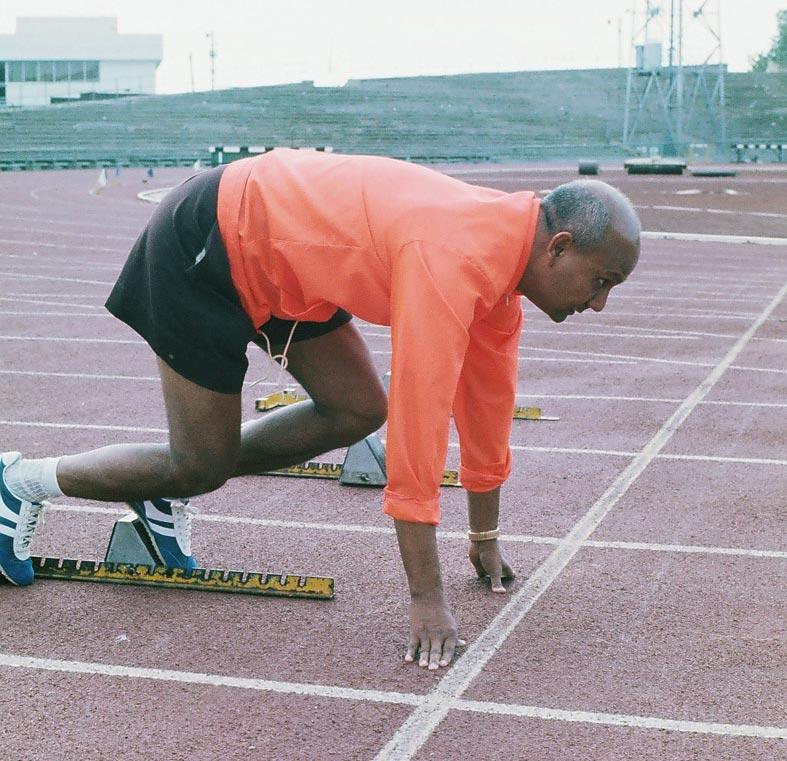
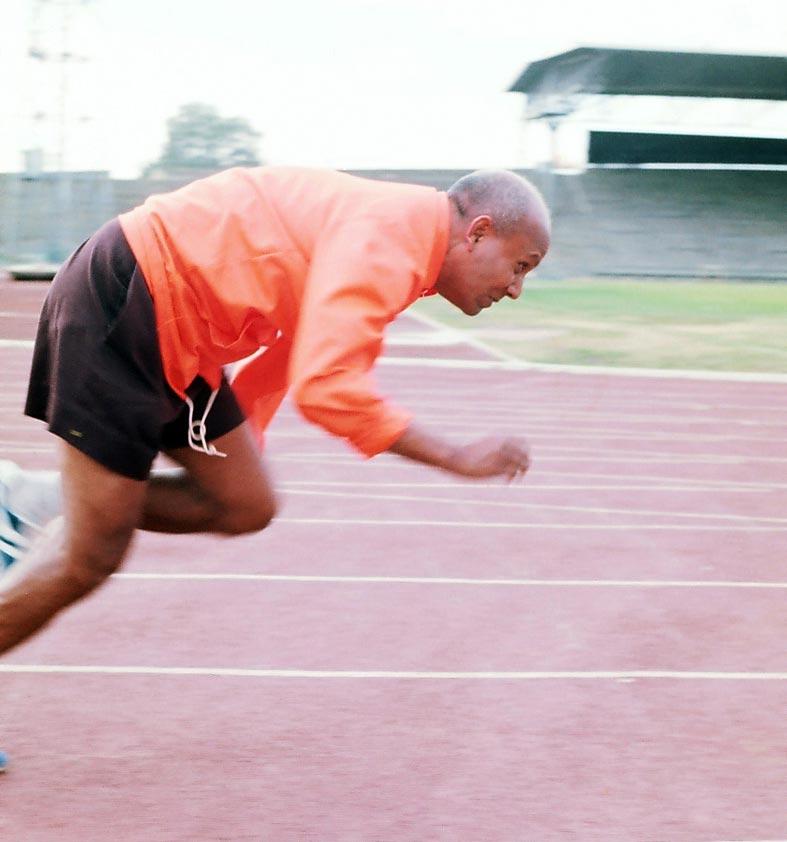
Sri Chinmoy visits Melbourne 9 March 1976.

Sri-chinmoy

Read an account by Kishore Cunningham on Sri Chinmoy's visit to an athletic track near the former Olympic stadium in Melbourne


Cycling Prayer

by Sri Chinmoy
before starting to exercise on his stationary bicycle at his home in New York


7:21 a.m.

My Absolute Lord Supreme!
No more a fault-finding mind.
More a God-loving heart
In every human life, everywhere —
More, ever more.


Published in My Aspiration-Heart Cycles, part 2


Weightlifting Prayers

by Sri Chinmoy
at his home in New York


8:50 a.m.

My Supreme, my Supreme, my Supreme!
An unconditional self-giver
Is the winner
Of God’s Peace Award.
My Supreme, my Supreme, my Supreme!

Before using a seated double-arm machine up to 140 lbs. with each arm simultaneously.


9:02 a.m.

My Supreme, my Supreme, my Supreme!
My sleepless and breathless
God-gratitude-heart
Is the shortest and safest stairway
To arrive at
God’s Transcendental Height.
My Supreme, my Supreme, my Supreme!

Before lifting 650 lbs. with each arm simultaneously six times. (Total: 1,300 lbs.)


9:20 a.m.

My Supreme, my Supreme, my Supreme!
I shall never allow
My aspiration-heart, my dedication-life
And my God-manifestation-accounts
To ever be empty.
My Supreme, my Supreme, my Supreme!

Before doing sixty-seven one-arm pushes with 700 lbs. (31 right, 36 left)


Published in My Morning Soul-Body Prayers, part 13


Photo by Pulak Viscardi


Sri Chinmoy walking at Oakland Lake in Queens, New York.


March 9

Photo by Dhanu Alaimo


Kamakura

by Sri Chinmoy
at the Peace Tree planting and meditation held in the Kōtoku-In Temple, Kamakura, Japan

The Mother of the Sri Aurobindo Ashram and Rabindranath Tagore came to Kamakura in the early 1900s. They stood and meditated at the exact place where we stood and meditated. Can you imagine, they came at the beginning of the century and now it is the end of the century! Lord Buddha is immortal. We shall come and go, but Lord Buddha will remain here, generation after generation.


Published in You Belong to God


From left to right: A Buddhist priest, William W. Pearson, Rabindranath Tagore, Mirra Richard (who later became the Mother of the Sri Aurobindo Ashram) and Paul Richard at the Great Buddha in Kamakura, Japan, June 1916.