|
The write stuff: Giving peace a chance Scottish poet and author Alan Spence A few weeks ago, I switched on the TV and tuned in to Channel 4 News. The main story was about the sudden floods affecting Europe. Jon Snow was talking about the damage caused, the lives lost, and film footage appeared behind him. One image in particular stayed on screen for some time. It showed a statue on the banks of the Vitava River in Prague. Read more in The Scotsman… .
|

|
Sri Chinmoy’s Statue in Prague – calm in the midst of the storm As floods ravage Europe, a symbol of hope rises above the waters. Media outlets around the world – from Australia to China; from India to the USA; and from South Africa to the Middle East – have published remarkable photographs of the statue of Sri Chinmoy in the flooded Vltava River in central Prague, Czech Republic, June 2, 2013. Read more... .
|

|
A Truth Must Be Lived by Aparajita (Adam) Fishman As Westerners, hence outsiders, we are most often struck by two aspects of Indian religion. At first, we are struck by the overwhelming multitude and diversity of forms in which God is worshipped. To our sensibilities, religion infects everyday life with almost brute force. In short, Indian religion is radically experiential in nature. Next to this plethora of outer manifestations, perhaps even more striking is the astounding height and depth with which Indian philosophy probes the nature of the Cosmos, the amazing subtlety of the vision of reality it espouses. Read more... .
|
|
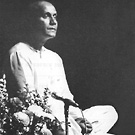
Reflections on Meditation Inspired by his spiritual teacher Sri Chinmoy, award-winning writer Alan Spence considers the meaning of meditation and its practice from a Hindu perspective. The nice thing about being up early in the morning is the stillness, the silence. The hustle of the day hasn't really started, and it's a good time to just sit, quiet and meditate. My spiritual teacher Sri Chinmoy — a man I've known for over 30 years — expresses it beautifully: “Meditation is silence, energising and fulfilling. Silence is the eloquent expression of the inexpressible. Read more... .
|

|
Why things go amiss with mysticism Opinion piece from The Economic Times (The Times of India) by Mukul Sharma Sri Chinmoy...once wrote: “Mysticism, poor mysticism! When it is under-estimated and oversimplified, it comes down from its original sphere and stands beside religion. But even here if a person is sincere, he will realise that his highest religious experience is nothing more than an uncertain, obscure and faint perception of Truth; whereas, no matter what kind of mystical experience he has, he will feel the intensity, immensity and certainty of Truth.” Read more... .
|

|
The Voice of the Twentieth Century – Hope of the Future by Animesh Harrington Having crossed the threshold of the millennium, we begin to survey the unhorizoned timescape of possibilities before us. Yet with reflections of the past still in our thoughts, and so much of our lives still influenced by the twentieth century, we may be tempted to ask just how will the last 100 years be judged by future generations? We may never have a definitive answer, or we may have to wait centuries before historians arrive at a consensus, but we cannot merely extrapolate from the past or rely on commentators of current affairs to predict the future – we must be willing to see through the eyes of a visionary. Read more... .
|

|
Remembering Sri Chinmoy by M. Fazlur Rahman Some have teardrops trembling in their eyes, some have the monsoon rains flowing from theirs, hands folded on the heart, all heads are bowed in sorrow. The world peace messenger, Guru Sri Chinmoy has left us all immersed in an ocean of grief. His body lies in wake at the ashram that he built; devotion-filled songs composed by him on every lip – ‘Amar Guru, Sabar Guru…’ Read more... .
|
|
The Many Names of the Master by Dr. Vidagdha Bennett Sri Chinmoy came into this world between 5:13 and 5:30, an hour before sunset, on Thursday, August 27th, 1931. According to the Indian calendar, it was the month of bhadra, towards the end of the monsoon season. Throughout his lifetime, the child that was born on that day to Shashi Kumar Ghosh and his wife Yogamaya was known by many different names and appellations. This is a humble attempt to reveal the significance of some of these names. Read more... .
|
|
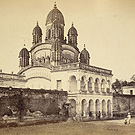
Sri Ramakrishna and Sri Chinmoy by Dr. Kusumita P. Pedersen Sri Chinmoy is widely known as the exponent of a spirituality of transformation, a philosopher, a poet, a musician and artist, a humanitarian, and a server of peace.… For his entire life, Sri Chinmoy cherished a most intimate inner connection with Sri Ramakrishna, whom he profoundly loved and held in the highest possible regard. In addition to the special kinship claimed by many Bengalis, this connection was a spiritual one. this PDF article on page 120. .
|